Arizona Privatized Prison Health Care to Save Money. But at What Cost?

Arizona Privatized Prison Health Care to Save Money. But at What Cost?

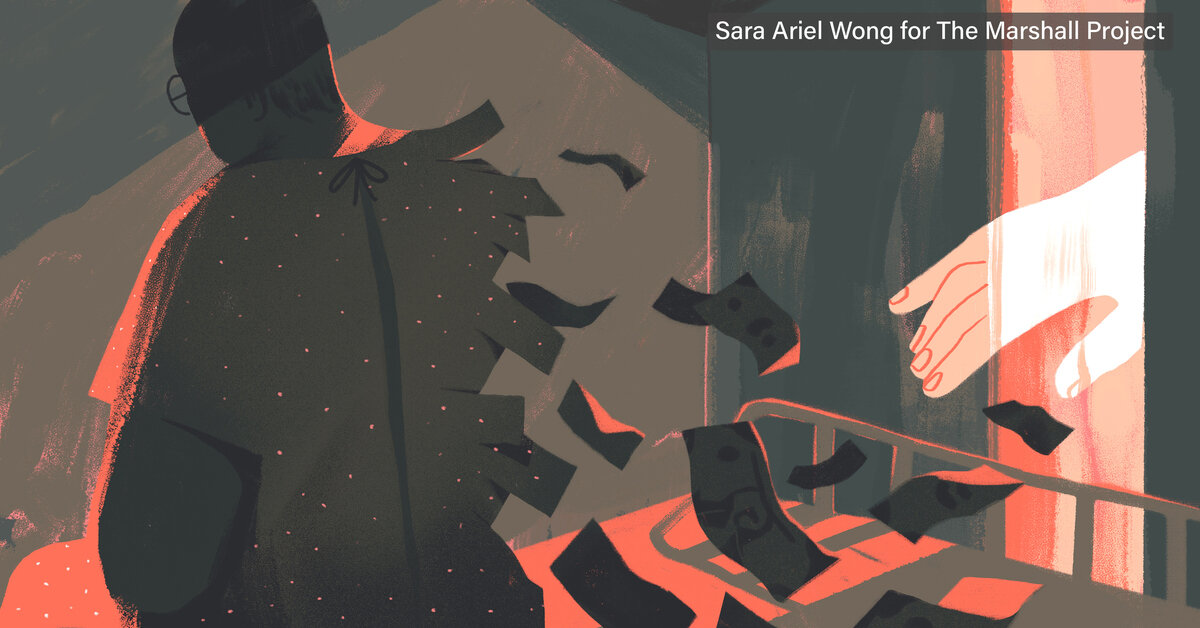
In 2017, Walter Jordan wrote a memo to a federal judge from the Arizona State Prison Complex in Florence. “Notice of Impending Death,” it said in a shaky hand.

Jordan told the judge that Arizona corrections officials and Corizon Health, the state prison system’s private health care contractor at that time, delayed treating his cancer for so long that he would be “lucky to be alive for 30 days.” Jordan, 67, had a common form of skin cancer that is rarely life-threatening if caught early, but said he experienced memory loss and intense pain from botched care. Other men in his unit were also denied treatment, he wrote, “all falling, yelling, screaming of pain.”

Jordan was dead eight days later.

Reviewing his medical records later, Dr. Todd Wilcox, a physician hired by lawyers for the state’s prisoners, agreed that Jordan’s death was likely preventable. Corizon’s treatment of Jordan’s “excruciating needless pain,” was “the opposite of how cancer pain should be managed,” he said.

Wilcox will take the stand in a landmark trial that begins Monday in Phoenix, the latest chapter in an almost decade-long struggle to determine whether Arizona’s prisoners are getting the basic health care they are entitled to under the law.

The trial pits Arizona against the people held in its prisons, who argue in a class-action lawsuit that the medical services they receive are so poor, they constitute cruel and unusual punishment. The state’s current health care contractor, Centurion, is the latest in a string of companies that have failed to pass muster with the courts.

None of the companies have been named as defendants in the lawsuit, because, the claimants say, the state is ultimately responsible for their care. The suit was originally filed in 2012, shortly before private contractors took over Arizona’s prison medical services. But whether privatization can provide decent care is one of the biggest issues looming over the trial.

The Arizona Department of Corrections declined to comment on pending litigation. Centurion of Arizona and Corizon, based in Tennessee, did not respond to multiple requests for comment.

Arizona is one of around two dozen states that use a private, for-profit contractor to provide prison medical care, and almost all have been sued. But a trial is rare, as most states settle to avoid this kind of exhaustive public scrutiny.

Health care in Arizona prisons is “grossly inadequate,” the prisoners have said in
Read More

Health care plagued by new supply chain shortages

Health care plagued by new supply chain shortages

From medications to gloves to crutches, the strains of the global supply chain are hitting U.S. health care hard.

Why it matters: Shortages of health care supplies can quickly jump from a nuisance to a life-or-death proposition. They indicate serious vulnerabilities in the U.S. health care supply chain.

State of play: After seeing major supply shortages for protective equipment and ventilators in the early months of the pandemic, critical supplies stabilized and, in some places, demand for domestic products later bottomed out.

  • Now global supply chain tie-ups are rippling across the industry again, leading to extended wait times for commonly used supplies and equipment.

What they’re saying: “We’re experiencing a vast array of global challenges that, layered together, create bottlenecks in a system not designed for such demands,” according to an October report from medical supply giant Premier.

  • Premier projects the problems for health care to last well into 2022.

Details: Some hospitals around the U.S. recently began seeking donations of aluminum crutches, walkers and wheelchairs.

  • The FDA is investigating allegations that used medical gloves were washed and resold as new gloves.
  • Blood tubes and Foley catheters are also among some of the products in short supply at the University of Alabama at Birmingham, ABC 33/40 reported.
  • There are shortages of raw materials for manufacturing, including semiconductors, or chips commonly used in electronics, and plastic resins that can be used to make everything from car parts to heart valves.
  • The chip shortage hit ResMed, a company that creates ventilators, sleep apnea machines, and other respiratory equipment, San Diego Union-Tribune reported last week.

What they’re saying: “I am definitely working with some of the biggest names out there and really asking, begging, pleading that we should prioritize medical devices over another cellphone, another electric car, another cloud-connected refrigerator,” ResMed CEO Mick Farrell told the Union-Tribune.

Drug shortages at retail pharmacies and hospitals are also a concern.

  • Hundreds of drugs are in shortage at hospital pharmacies, including the anti-inflammatory drug tocilizumab, which is given to both cancer and COVID-19 patients, CBS News reported.
  • A pharmacy in Michigan said inhalers are one of the most difficult items to get, ABC 12 News reported. A South Carolina pharmacy said there are a few blood pressure medications they can’t get in stock, News 19 reported.
  • And a Nashville pharmacy said they were even having trouble getting prescription vials to
Read More

Pandemic increases mortality risk for people with mental health issues

Pandemic increases mortality risk for people with mental health issues
healthcare worker walking quickly through a hospital corridorShare on Pinterest
The pandemic increased mortality rates in people with mental health issues compared with people without. JGI/Tom Grill/Getty Images
  • A study finds that people with mental health issues or intellectual disabilities have been far more likely to die during the pandemic than others.
  • More people in these groups have died of COVID-19 and other causes.
  • There are likely several reasons for this disparity.

According to a new study, people in the U.K. with mental health issues and intellectual disabilities were at about twice the risk of dying than people without those conditions before the COVID-19 pandemic.

The study suggests this difference has increased dramatically during the pandemic, with people with mental health conditions and intellectual disabilities experiencing much higher death rates.

The current study considered “excess deaths,” a general category of deaths during a particular period compared with historical levels.

Says the study’s lead author, Dr. Jayati Das-Munshi of King’s College London in the United Kingdom:

“The results from our study paint a stark picture of how the existing vulnerability of those with mental health conditions and intellectual disabilities has worsened during the COVID-19 pandemic. The higher death rates compared [with] the general population were associated with more deaths from [SARS-CoV-2] infection itself, as well as deaths from other causes.”

Dr. Thomas F. Betzler, executive clinical director of the Montefiore Behavioral Health Center in New York, who was not involved in the study, confirmed for Medical News Today that “many of our patients have similar issues.”

Dr. Das-Munshi says the study’s findings warrant a reappraisal of the groups understood to be at high risk of dying from COVID-19:

“People living with severe mental health conditions and intellectual disabilities should be considered a vulnerable group at risk of COVID-19 mortality — as well as deaths from other causes — throughout the pandemic. We suggest a need to prioritize vaccination and optimize physical healthcare and suicide risk reduction before, during, and after peaks of [SARS-CoV-2] infection in people living with mental health conditions.”

The study appears in The Lancet Regional Health Europe.

The study’s analysis found an increased likelihood of dying among people with mental health issues and intellectual disabilities in the U.K. during the first COVID-19 lockdown compared with the general population.

Specifically, they found that:

  • People with intellectual disabilities were 9.24 times more likely to die of COVID-19.
  • People with eating disorders were 4.81 times
Read More

WHO and partners call for action to better protect health and care workers from COVID-19

WHO and partners call for action to better protect health and care workers from COVID-19

The World Health Organization and partners[i] have issued an urgent call for concrete action to better protect health and care workers worldwide from COVID-19 and other health issues. 

The organizations are concerned that large numbers of health and care workers have died from COVID-19, but also that an increasing proportion of the workforce are suffering from burnout, stress, anxiety and fatigue.

In a Joint Statement issued this week, WHO and partners are calling
on all Member State governments and stakeholders to strengthen the monitoring and reporting of COVID-19 infections, ill-health and deaths among health and care workers. They should also include disaggregation by age, gender and occupation as a standard
procedure, to enable decision makers and scientists to identify and implement mitigation measures that will further reduce the risk of infections and ill-health.

The Statement also urges political leaders and policy makers to do all within their power to make regulatory, policy and investment decisions that ensure the protection of health and care workers. It highlights the opportunity to align this with a forthcoming
global health and care worker compact and the International Labour Organization’s call for a human-centered recovery from the COVID-19 crisis.

Finally, the partners call upon leaders and policy makers to ensure equitable access to vaccines so that health and care workers are prioritized in the uptake of COVID-19 vaccinations. Available data from 119 countries suggest that by September 2021,
2 in 5 health and care workers were fully vaccinated on average, with considerable difference across regions and economic groupings. Less than 1 in 10 have been fully vaccinated in the African region while 22 mostly high-income
countries reported that above 80% of their health and care workers are fully vaccinated. These rates only account for data reported to WHO through the standard mechanisms.

We have a moral obligation to protect all health and care workers, ensure their rights and provide them with decent work in a safe and enabling practice environment. This must include access to vaccines”, said Jim Campbell, Director
of the WHO Health Workforce Department. “Beyond vaccines , economic recovery  and all new investments in emergency preparedness and response must prioritize  the education and employment of health and care workers, linking to the UN  Secretary-General’s
Global Accelerator for Jobs and Social Protection,” he added.

A new WHO working paper estimates
that between 80 000 to 180 000 health

Read More

Health care costs for people with rare diseases have been underestimated, study shows

Health care costs for people with rare diseases have been underestimated, study shows

A new, retrospective study of medical and insurance records indicates health care costs for people with a rare disease have been underestimated and are three to five times greater than the costs for people without a rare disease. The study, led by the National Institutes of Health’s National Center for Advancing Translational Sciences (NCATS), provides new evidence of the potential impact of rare diseases on public health, suggesting that nationwide medical costs for individuals with rare diseases are on par with those for cancer and heart failure. The study’s results were published Oct. 21 in the Orphanet Journal of Rare Diseases.

There needs to be greater public awareness of the large and growing medical footprint of rare diseases in society. Only about 10% of rare diseases have an FDA-approved therapy for their treatment. The findings underscore an urgent need for more research, and earlier and more accurate diagnoses of and interventions for these disorders.”


Anne Pariser, M.D., senior author, director, NCATS Office of Rare Diseases Research

Most of the approximately 7,000 to 10,000 known rare diseases disproportionately affect children, adolescents and young adults. Individually, most rare diseases might affect only a few hundred to a few thousand people worldwide. However, rare diseases are collectively common, affecting an estimated 25 million to 30 million people in the United States. Many of these diseases have a genetic cause, are serious or life-threatening and are hard to diagnose and treat.

The pilot study was a collaborative effort among NCATS; Eversana Life Sciences, Chicago; Oregon Health & Science University, Portland; Sanford Health, Sioux Falls, South Dakota; and a health insurer in Australia. Pariser and colleagues analyzed patients’ diagnosis information in medical records and billing codes. They used International Classification of Diseases (ICD) codes, which designate a disease diagnosis and other methods, to determine those individuals with rare diseases and their direct medical costs for 14 rare diseases in four health care systems compared to non-rare disease patients of a similar age.

The pilot study aimed to test the feasibility of this approach in analyzing data on rare diseases prevalence and costs. The 14 rare diseases represented a diverse set of disorders that differ in prevalence, organ systems affected, age of onset, clinical course, and availability of an approved treatment or specific ICD code. Examples of the selected rare diseases include sickle cell disease, muscular dystrophy and eosinophilic esophagitis.

The

Read More

How the US Army’s holistic health and fitness program will prevent injuries

How the US Army’s holistic health and fitness program will prevent injuries

It appears the era of “a couple of Motrin should do the trick” could be nearing its end in the Army. 

“My sergeants major right now, they hurt. Their bodies hurt,” Col. Phillip Kiniery, the commander of the 2nd Brigade Combat Team, 82nd Airborne Division, told Task & Purpose last week. “I need to make sure that the next group of leaders and senior leaders in the Army don’t feel like I feel physically. That they’re healthy … I wish we thought this way when we were going up.” 

The 4,500-soldier brigade is part of an effort to address injuries early and give soldiers more access to physical and occupational therapy through the Army’s holistic health and fitness program, which was announced in 2017 and officially put into Army policy last year. It focuses on total wellness, not just physical fitness, and urges mental and spiritual wellbeing, getting enough rest, eating well, and, more simply, just taking care of yourself. 

Referred to internally as H2F, the holistic health and fitness program encourages soldiers to take better care of their minds and bodies, not simply push through the pain after an injury, and emphasizes learning how to physically train properly. And at least one brigade commander is hoping that with that kind of change, the next generation of Army leaders won’t have the same kinds of aches and pains as, you know, all of you do. But to do that will require a certain level of humility from leaders. 

This is the Army’s plan to stop physically breaking so many of its soldiers
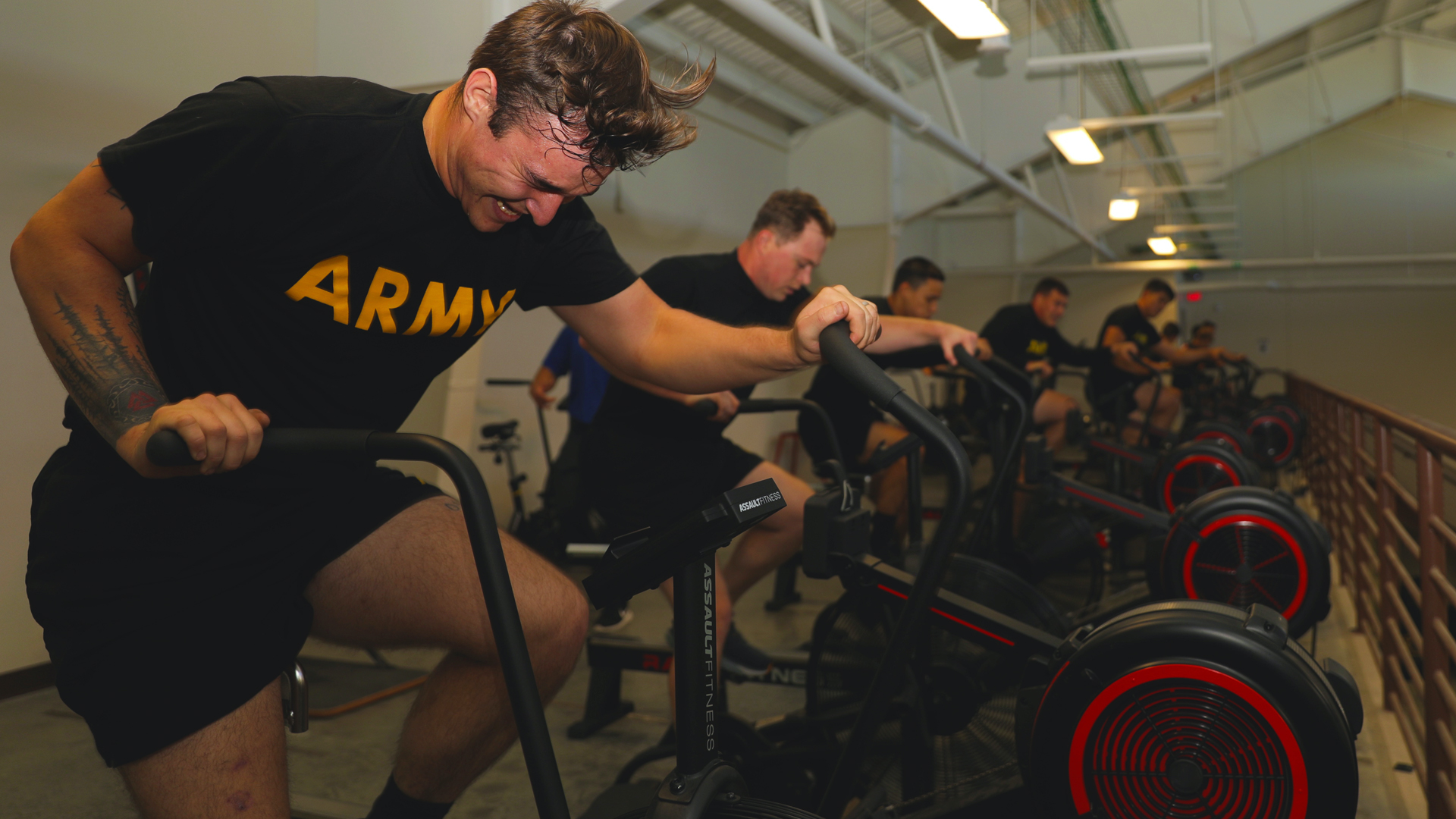
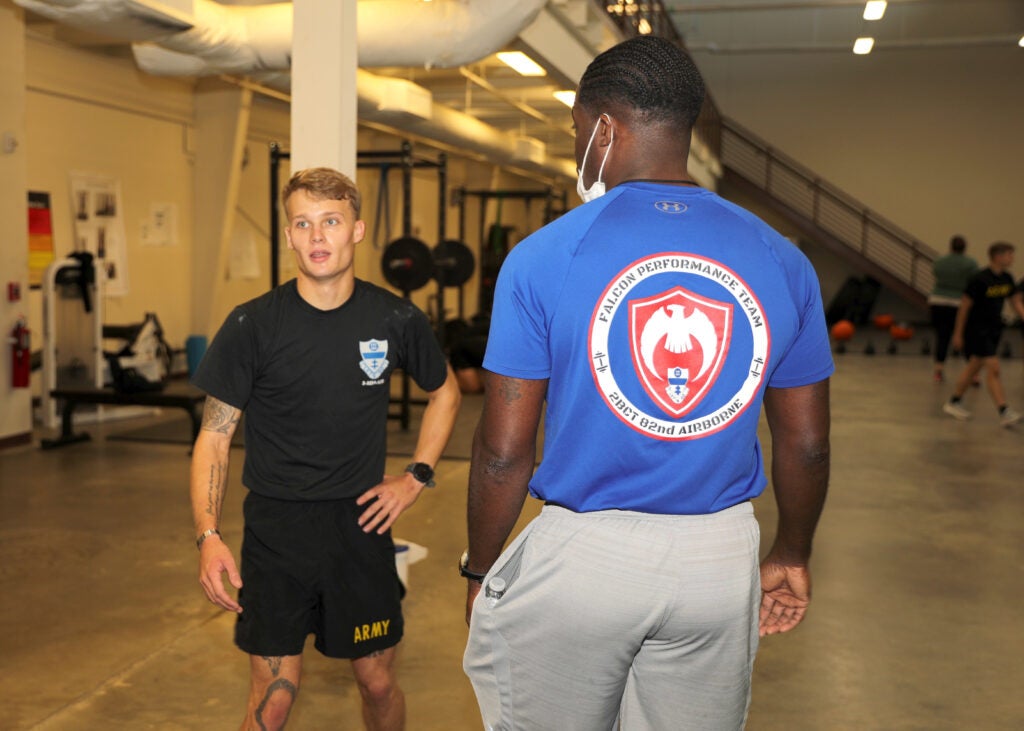
Paratroopers assigned to 2nd Brigade Combat Team, 82nd Airborne Division, utilize the physical training strength and conditioning coaches at the Falcon Holistic Health and Fitness Center (H2F) on October, 18, 2021 at Fort Bragg, North Carolina. (U.S. Army/Staff Sgt. Andrew Mallett)

“That’s what I’m fighting every day: ‘We’re the 2nd Brigade, 82nd, we’re going to jump into combat anywhere in the world, we’re the 82nd Airborne Division,’” Kiniery said. “Like hey sergeant, I got it. You can kill anything, you can jump out of every aircraft, but just stop and listen to this strength coach because you’re doing it wrong.” 

While the program could bring positive changes to soldiers everywhere, it will likely be years before it’s implemented Army-wide. There are currently 28 Army brigades — located at Fort Bragg, Fort Drum, Fort Polk, Fort Bliss, and Joint Base Lewis McChord — who have started implementing the holistic health and fitness program.

Read More