
5 Startups Shaping the Future of Health Care

5 Startups Shaping the Future of Health Care

“The fourth industrial age is here,” says Daniel Kraft, a health care futurist and medical doctor. “It’s transforming how we get our digital banking done, how we stream movies. But health care is still stuck in the third — or maybe the second — industrial age, with fax machines and CD-ROMs.”

Specifically, innovations such as artificial intelligence and machine learning have been stubbornly slow to enter the health sector. And the big strides that have been made in data collection — wearables that monitor your vitals, voice biomarker trackers, and genomic sequencing, to name just a few — have so far resulted in only a few widely used, truly useful applications.

“Nobody wants more data, they want the actual insights that are useable,” says Kraft, who prefers the term now-ist to futurist. “How do we make actionable information that translates to the point of care or the bedside?” 

Bob Wachter, chair of the UC San Francisco Department of Medicine and author of The Digital Doctor, remains optimistic that some of these new technologies may still have a significant impact. “Whether you’re looking at an X-ray, or trying to predict how many people are going to come to the emergency room next Tuesday, or seeing a patient and being reminded of an alternative diagnosis, A.I. will be useful in all sorts of ways,” he says. “I think it’s going to all work out. But it’s going to take far longer and be far bumpier than anybody anticipates.”

Here are five of the companies industry observers say are leading the charge down that bumpy road and reimagining the future of health care.

1. Youper

Youper designed its A.I.-based chatbot to guide users through the process of cognitive-behavioral therapy, supplemented with remote psychiatrists, health coaches, and an online pharmacy. The chatbot looks and feels like a standard text message exchange: patients talk about their thoughts and feelings and the A.I. responds with questions and advice, as programmed by mental health professionals.

“Some people say the chatbot is even better than talking to a human, because you can say how you’re truly feeling,” says Youper CEO Jose Hamilton. “[You might say,] ‘I’m feeling 100 percent angry’ or ‘100 percent depressed.’ And then the chatbot will start guiding you toward what’s making you feel that way.”

Youper does not intend to replace psychiatrists, but instead to allow them to see more patients than

Read More

As public health workers flee the field, California becomes more vulnerable to mix of diseases

As public health workers flee the field, California becomes more vulnerable to mix of diseases

There were days, nights and weekends in the early months of the pandemic when Denise Von Bargen was the only person running coronavirus tests at the public health lab in Ventura County. She once had eight or nine employees to assist her, but, one by one, they had all retired or left for other jobs.

Like other public health laboratories in California charged with broad-scale disease testing and surveillance, the Ventura lab received federal and state money for new equipment and short-term hires to bolster its response to COVID-19. But the funding was temporary, and Von Bargen, the director, could not use it to increase the salaries of her employees, who could earn more money doing less work in the private sector.

Operations deteriorated further last month, after the lab lost its license to run routine tests that check the county’s ocean water for deadly bacteria. It appears to have been a clerical error: The licensing paperwork changed, and the staff typically responsible for submitting the application had quit.

“The biggest threat to [public health labs] right now is not the next emerging pathogen,” said Donna Ferguson, director of the public health lab in Monterey County, “but labs closing due to lack of staffing.”

Across California, public health departments are losing experienced staffers to retirement, exhaustion, partisan politics and higher-paying jobs. Even before the pandemic throttled departments, staffing numbers had shrunk with county budgets. But the decline has accelerated over the past year and a half, even as millions of dollars in federal money has poured in.

Public health nurses, microbiologists, epidemiologists, health officers and other staff members who fend off infectious diseases like tuberculosis and HIV, inspect restaurants and work to keep communities healthy are abandoning the field. It’s a problem that temporary boosts in funding can’t fix.

The brain drain is sapping community health oversight in ways big and small. The people who staff public health labs, for example, run complex tests for deadly diseases that require specialized training most commercial labs lack. While their work is largely unseen by the general public, they touch almost every aspect of society.

Public health labs sample shellfish to make sure it is safe for eating. They monitor drinking water, and develop tests for emerging health threats such as antibiotic-resistant bacteria. They also test for serious diseases, such as measles and COVID-19. And they typically do it at a fraction of

Read More

CVS Health: improving healthcare for women

CVS Health: improving healthcare for women

American healthcare company CVS Health is the world’s seventh largest company by revenue, and as of March 2021 ranked at number 7 on the Fortune Global 500 list.

First established in 1963 under the name Consumer Value Store (CVS), it began primarily selling beauty products. Over the decades it has grown to operate a retail pharmacy chain,  pharmacy benefits manager CVS Caremark,  and acquired Aetna, a health insurance provider, among other brands. 

The company also has a big focus on research and analytics,  to help identify solutions that can reduce costs and improve outcomes. The organisation’s latest research, the 2021 Health Care Insights Study, revealed clear differences in the way men and women engage in their healthcare. It found that women are more proactive with general medical check-ups than men, as more women cited this as a reason for visiting their practitioner (73% vs. 58%).  

Dr Joanne Armstrong, Chief Medical Officer for Women’s Health and Genomics, says one of the reasons for this is that women traditionally have greater involvement in the healthcare decision-making of their families. “This means they have heightened awareness about the healthcare system in general. This vital role as a consumer and purchaser of healthcare products and services likely contributes to why female healthcare consumers are more active and engaged with their own health than males.” 

The study also found that men are more likely than women to seek out virtual care (64% vs. 46%). “Males reported that having the option of virtual care when getting routine care for a minor illness or injury was more important than it was for female respondents.  Women, on the other hand, are increasingly seeking individualised care, which aligns with their personal preferences, health concerns and needs” Armstrong explains. 

“More women than men want their doctors to be aware of their lifestyle choices, specifically their use or non-use of alcohol, their level of happiness and life satisfaction, and lifestyle habits that could impact their health.” 

Armstrong highlights that the COVID-19 pandemic has also revealed differences in healthcare between genders.  “Even though women often oversee the healthcare needs of their families, time and budget constraints can make it challenging for many women to practice self-care. The COVID-19 pandemic exacerbated this further, highlighting the need for better access, affordability and personalisation of care so that women can receive care when they need it, in the way they wish to

Read More

Monday, November 1, 2021 | Kaiser Health News

Monday, November 1, 2021 | Kaiser Health News

World Has Lost At Least 5 Million People To Covid

While it’s likely a vast undercount, the official pandemic death toll surpassed 5 million. “When we get out our microscopes, we see that within countries, the most vulnerable have suffered most,” an infectious disease specialist told the AP.


AP:
COVID-19’s Global Death Toll Tops 5 Million In Under 2 Years


The global death toll from COVID-19 topped 5 million on Monday, less than two years into a crisis that has not only devastated poor countries but also humbled wealthy ones with first-rate health care systems. Together, the United States, the European Union, Britain and Brazil — all upper-middle- or high-income countries — account for one-eighth of the world’s population but nearly half of all reported deaths. The U.S. alone has recorded over 740,000 lives lost, more than any other nation. (Johnson, 11/1)


Bloomberg:
Covid Deaths Top 5 Million Even As Vaccines Slash Fatality Rate


More than 5 million people worldwide have died from Covid-19 less than two years after the novel pathogen was first documented, despite the arrival of vaccines that have slashed fatality rates across the globe. The latest 1 million recorded deaths came slower than the previous two. It took more than 110 days to go from 4 million deaths to 5 million, compared to less than 90 days each to reach the 3- and 4-million marks. The rate has returned to what was seen during the first year of the pandemic, when the virus was still taking hold. (Hong, 11/1)


AP:
A World Remembers: Memorials Honor COVID-19’s 5 Million Dead


The Italian city that suffered the brunt of COVID-19’s first deadly wave is dedicating a vivid memorial to the pandemic dead: A grove of trees, creating oxygen in a park opposite the hospital where so many died, unable to breathe. Bergamo, in northern Italy, is among the many communities around the globe dedicating memorials to commemorate lives lost in a pandemic that is nearing the terrible threshold of 5 million confirmed dead. (10/30)

Also —

Read More

How to find the best health insurance plan for you and your family : Shots

How to find the best health insurance plan for you and your family : Shots
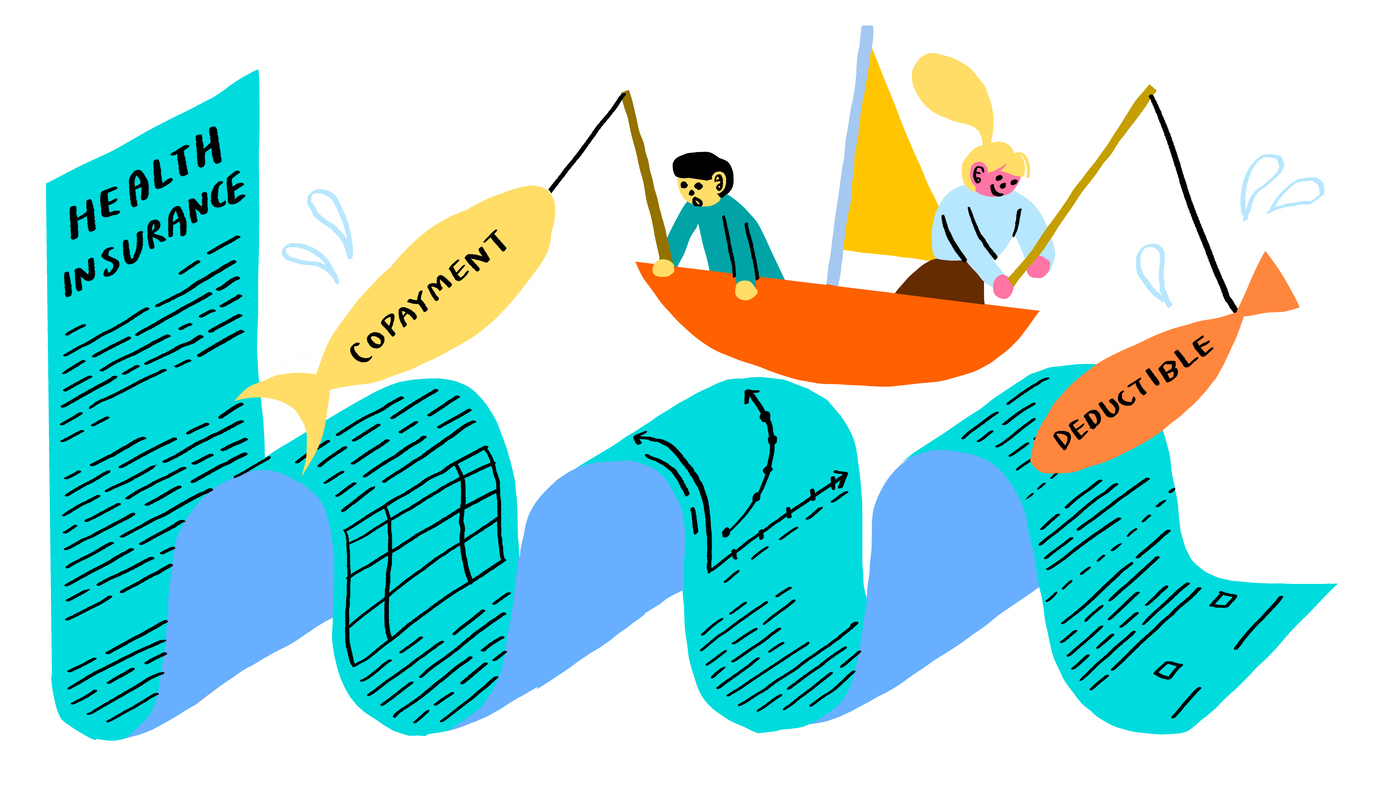
A long document labeled "health insurance" turns into waves as the document stretches across the screen. Two people in a small boat ride the "waves" of the document, fishing for the jargon like "deductible" and "copayment."

If you’re buying health insurance outside a job-based plan, you’re in luck this fall. After years of cutbacks and — some say sabotage — of the Affordable Care Act during the Trump administration, the Biden administration is pulling out the stops to help people find good health plans on HealthCare.gov right now — the open enrollment period starts this week. You will have more time to sign up, more free help choosing a plan, and a greater likelihood you’ll be eligible for subsidies to help keep down the costs of a health plan you buy via the ACA marketplace.

Still, picking health insurance can be hard work, even if you’re choosing a plan through your employer. There are a lot of confusing terms, and the process forces you to think hard about your health and your finances. Plus you have to navigate all of it on a deadline, often with only a few-week period to explore your options and make decisions.

Whether you’re aging out of your parent’s plan and picking one for the first time, or you’re in a plan that no longer works for you and you’re ready to switch things up, or you’re uninsured and want to see if you have any workable options, there’s good news. Asking yourself a few simple questions can help you zero in on the right plan from all those on the market.

Here are some tips on where to look and how to get trustworthy advice and help if you need it.

Tip #1: Know where to go

It’s not always obvious where to look for health insurance. “In this country it is a truly wacky patchwork quilt of options,” says Sabrina Corlette, who co-directs the Center on Health Insurance Reform at Georgetown University.

If you’re 65 or older, you’re eligible for Medicare. It’s a federally run program — the government pays for much of your health care. You might also be eligible if you have certain disabilities. For those already enrolled in Medicare or in a Medicare Advantage plan, the open enrollment period to switch up your supplemental health and prescription drug plans for 2022 runs through Dec. 7 this year.

For those under age 65, Corlette says, “the vast majority of us get our coverage through our employer. The employer typically will cover between 70% and 90% of your premium costs, which is pretty nice.”

Read More

Rise of syphilis in the U.S reflects neglect of long-term public health funding : Shots

Rise of syphilis in the U.S reflects neglect of long-term public health funding : Shots

Mai Yang, a communicable disease specialist, searches for Angelica, a 27 year-old pregnant woman who tested positive for syphilis, in order to get her treated before she delivers her baby.

Talia Herman for ProPublica


hide caption

toggle caption

Talia Herman for ProPublica


Mai Yang, a communicable disease specialist, searches for Angelica, a 27 year-old pregnant woman who tested positive for syphilis, in order to get her treated before she delivers her baby.

Talia Herman for ProPublica

When Mai Yang is looking for a patient, she travels light. She dresses deliberately — not too formal, so she won’t be mistaken for a police officer; not too casual, so people will look past her tiny 4-foot-10 stature and youthful face and trust her with sensitive health information. Always, she wears closed-toed shoes, “just in case I need to run.”

This story comes from ProPublica, a nonprofit newsroom that investigates abuses of power. Sign up to receive their biggest stories as soon as they’re published.

Yang carries a stack of cards issued by the Centers for Disease Control and Prevention that show what happens when the Treponema pallidum bacteria invades a patient’s body. There’s a photo of an angry red sore on a penis. There’s one of a tongue, marred by mucus-lined lesions. And there’s one of a newborn baby, its belly, torso and thighs dotted in a rash, its mouth open, as if caught midcry.

It was because of the prospect of one such baby that Yang found herself walking through a homeless encampment on a blazing July day in Huron, Calif., an hour’s drive southwest of her office at the Fresno County Department of Public Health.

She was looking for a pregnant woman named Angelica, whose visit to a community clinic had triggered a report to the health department’s sexually transmitted disease program. Angelica had tested positive for syphilis. If she was not treated, her baby could end up like the one in the picture or worse — there was a 40% chance the baby would die.

Yang knew, though, that if she helped Angelica get treated with three weekly shots of penicillin at least 30 days before she gave birth, it was likely that the infection would be wiped out and her baby would be born without any symptoms at all. Every case of congenital syphilis, when a baby is born with the disease, is avoidable. Each is considered a

Read More