


Medicare Pay Cuts Will Hurt Seniors’ Care, Doctors Argue

Medicare Pay Cuts Will Hurt Seniors’ Care, Doctors Argue

[UPDATED at 11 a.m. ET for news developments.]

Doctors are urging Congress to call off cuts scheduled to take effect on Jan. 1 in the reimbursements they receive from Medicare.

In what has become an almost yearly ritual, physician groups are arguing that patients will have greater difficulty finding doctors who accept Medicare if lawmakers allow the pay cuts to happen.

A more than 4,000-page draft government spending bill released by lawmakers early Tuesday morning proposed much smaller-than-planned cuts to Medicare payments. But the bill, which Congress hoped to pass by the weekend to keep the government funded and avert a shutdown, would not go as far as doctors wanted.

“Despite overwhelming bipartisan, bicameral support to stop the full Medicare physician payment cut, Congress failed once again to end the cycle of harmful Medicare cuts, showing a disregard for vulnerable seniors,” the Surgical Care Coalition, an organization representing surgeons and anesthesiologists, said in a statement.

The doctors’ lobbying campaign had gained traction on Capitol Hill. A bipartisan group of 115 House lawmakers rallied behind doctors in a letter to congressional leaders and President Joe Biden last week, urging them to prevent cuts that they argued would “only make a bad situation far worse” for Medicare patients.

In recent years, the Centers for Medicare & Medicaid Services scheduled the pay cuts to offset the cost of increasing payments for underpaid services, like primary care. Physicians also stand to see reductions tied to broad cuts implemented by Congress in recent decades to try to control government spending.

Some Republicans have pushed to wait on passing the spending package until their party controls the House of Representatives next year and can have a greater say over what they call out-of-control spending. One priority of the incoming House Republican majority is curbing Social Security and Medicare, a federal health insurance program for people age 65 and older, among others.

“We’re mortgaging our kids’ futures,” Sen. Ron Johnson of Wisconsin, a Republican on the Senate Budget Committee, told reporters, referring to overall spending. “This is killing us from a financial standpoint. It’s got to stop.”

Despite concerns about ballooning government spending, for years doctors have been successful in delaying or softening proposed pay cuts, arguing that there would be dire consequences if the cuts kicked in.

Physicians carry a lot of political weight in Washington. The American Medical Association, the professional organization that represents and

Read More

Mobile Health And Fitness Sensor Market

Mobile Health And Fitness Sensor Market

Global Mobile Health And Fitness Sensor Market

The global mobile health and fitness sensor market is expected to reach an estimated $7.7 billion by 2026 with a CAGR of 17.2% from 2020 to 2026.

Wireless sensor networks, eHealth, wearable technology, and WBAN technology are the four subtypes of mHealth sensors. Patients can use mHealth sensors from their devices at home and can get monitored with health and physiological data without going to the doctor.

There is substantial use of both primary and secondary data sources in this research work. The research process entails the examination of a range of industry-affecting factors, such as governmental regulations, the market environment, the competitive landscape, historical data, current market trends, technological innovation, upcoming technologies, technical advancement in related industries, as well as market risks, opportunities, barriers, and challenges. The process of collecting data entails gathering information from a variety of sources, followed by data analysis, data synthesis, and data validation. The phase of data storage include gathering and gathering data from multiple data sources as well as thorough investigation.

The study, Global Mobile Health and Fitness Sensor Market, gives a broad analysis of the Mobile Health and Fitness Sensor market’s present state and highlights key industry elements such as key drivers influencing the market’s growth, obstacles, and possibilities for growth. To make market analysis simple for new entrants, the study also includes all the market statistics, including market value, volume, share, size, etc. A political, economic, social, technological, legal, and environmental examination is given.

An extensive analysis of industry trends and the present market environment is provided in the market survey report that was just published on the market for mobile health and fitness sensors. The key trends that determine the market’s size and the range of available products are studied in the market analysis. The study analyses the market from a variety of angles, including global, regional, and industry, in an effort to reach a larger audience and offer as much information as possible. The analysis of the market as a whole has been performed to investigate the main market growth-influencing factors.

Get Free Sample: https://analyticsmarketresearch.com/sample-request/mobile-health-and-fitness-sensor-market/10377/

Global Mobile Health and Fitness Sensor Market: Major Players
Johnson & Johnson
Philips
Fujitsu
Medtronic
Adidas
Bosch
Qualcomm
OMRON
Honeywell
Analog Devices
GE Healthcare

Global Mobile Health and Fitness Sensor Market: Types
Temperature sensor
Pressure sensor
Speed sensor
Level/position sensor
Gas sensor
Others

Global Mobile Health and

Read More

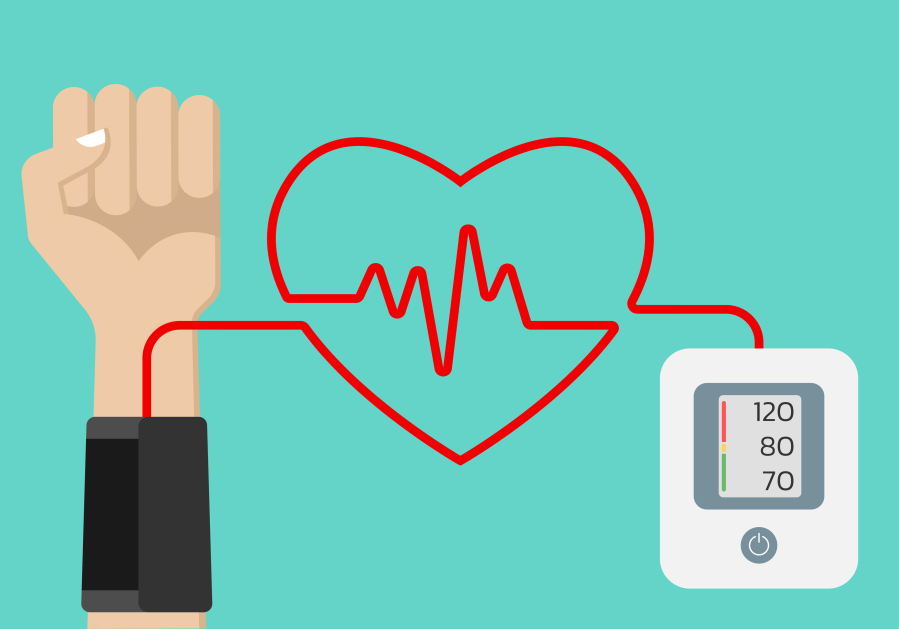
Northwest doctors say: Keep blood pressure in check with healthy lifestyle, testing at home

Northwest doctors say: Keep blood pressure in check with healthy lifestyle, testing at home

Because it draws zero attention to itself, high blood pressure — the technical term is hypertension — seems to be the easiest to shrug off of all ongoing health conditions in American adults.

It’s symptomless. It’s sneaky. A trivial paper cut will cause you more pain and suffering than this important aspect of your health.

Nearly half of all American adults have high blood pressure, according to the American Heart Association, and many don’t even know it.

But hypertension doesn’t stay symptomless forever, according to Dr. Noreen Nazir, a preventive cardiologist at Oregon Health & Science University.

“In the early stages, you can have elevated numbers but no sustained symptoms,” Nazir said. “The body is trying to compensate. It can do this for a time but you may be on your way to developing symptoms and developing negative outcomes later on.”

Avoid ‘Holiday Heart’

The holiday season is when we tend to eat and drink with abandon. Doctors have a name for seasonally troubled cardiovascular systems: “holiday heart.” If you’re trying to keep your blood pressure in check despite holiday treats and peer pressure, try these tips:

  • Before you hit that party, snack healthily and include protein. You’ll be less inclined to gorge.
  • At the party, start with a glass of water. Delay and reduce alcohol.
  • Keep exercising. In addition to keeping your blood pressure better regulated, it’ll reduce stress and keep your spirits bright.
  • Stick with your meds. If you tend to forget, get a weekly pill organizer.
  • Be careful with over-the-counter cold and flu meds, which can raise blood pressure. Read labels. 

According to the American Heart Association, chronic hypertension — that is, blood pressure that stays too high for too long — increases one’s risk of heart attack, stroke and a host of other health problems, from heart and kidney disease to vision loss and sexual dysfunction.

“Most people experience very little symptoms until it’s too late,” said Dr. Richard Segal, an internal medicine specialist at Kaiser Permanente in Salem, Ore.

Heart disease is the No. 1 cause of death for adults in the United States, according to the Centers for Disease Control and Prevention. Stroke is No. 5.

“Worldwide, raised blood pressure is estimated to cause 7.5 million deaths, about 12.8 percent of the total of all deaths,” according to the World Health Organization.

That’s why it’s important to get screened, understand what your numbers mean

Read More

What Does a Good Health-Care System Look Like?

What Does a Good Health-Care System Look Like?

I make a good living. I should have a larger retirement portfolio than I do, as my husband and I keep our living expenses within bounds, and I am a moderately successful self-employed professional. However, every few years, or sometimes a few years in a row, I find our household being bankrupted by the medical-industrial complex.  

This year has been uniquely devastating. My husband is a 75-year-old bone-cancer survivor. Two years of radical chemotherapy left him with a suppressed immune system, which means for most of the pandemic we’ve been hiding from people the way Gremlins hide from sunlight.

A few years ago he had a two-year bout of C. diff, for which the drugs cost thousands. He finally beat it.

A long-term result of the C. diff left him with bacteria in his teeth and gums, which resulted in him needing $25,000 worth of dental work. He lost his upper teeth, now has upper dentures, and had serious gum work done on all his bottom teeth. Medicare covered a tiny bit of this. Dental work is not considered worthy of proper insurance in this country. And without the dental care he would have developed sepsis and died.

This cost was on top of his Medicare deduction from his Social Security and his $471-per-month drug-plan copay.

We’ve had some truly INCOMPETENT primary-care physicians over the years.  We found a great doctor in 2006. He was an independent. Didn’t take insurance. Fee for service. Had studied at Loma Linda hospital. Great credentials. Finally a great primary-care physician. His wife, a Harvard-trained attorney who had retired from the law, ran his practice. Well, with the COVID pandemic, his wife burned out on medical administration, partly from all of the death they had to deal with. And she had a few COVID deaths in her own family. With his wife retiring from medical administration, he joined a boutique primary-care practice starting January 1, 2022. He’s no longer fee-for-service.  He went concierge. He takes insurance now. But the annual “concierge fee” for 2022 was $3,000 per patient per year. It is going up to $4,000 per patient for 2023.

Then there are MY medical costs. My insurance is $1,189 per month for second-from-top-level insurance. It goes up 14 percent next year. I have arthritic knees from being a 10-to-15-mile-a-week runner from my late teens to early 30s. At 6 foot 1, I am a

Read More

GAO appoints 7 healthcare leaders to HITAC

GAO appoints 7 healthcare leaders to HITAC

Seven new healthcare leaders from diverse industry backgrounds will be joining the Health Information Technology Advisory Committee, the federal group working to implement a health IT infrastructure that advances the electronic access, exchange and use of health information in the U.S. healthcare system.

WHY IT MATTERS

Established by the 21st Century Cures Act, HITAC and its subcommittees provide recommendations to the Office of the National Coordinator for Health Information Technology on policies, standards, implementation specifications and certification criteria. 

The new members, appointed by the Government Accountability Office, have served healthcare in both public- and private-sector capacities at organizations across the United States. 

Dr. Kikelomo Belizaire, the chief medical officer at Pegasystems, is also a practicing hospitalist in the Charlotte, North Carolina, region. She previously served as the medical director of Anthem’s commercial unit and as a physician treating high-acuity patients in several hospital systems in North and South Carolina, and as a healthcare consultant. 

Dr. Shila Blend is the health information technology director of the North Dakota Health Information Network, a statewide HIE. She also serves as a subject-matter expert with the Rural Emergency Medical Services Counts project, which is working to develop quality measures for emergency medical services in rural areas. She previously served the state in a number of preparedness and coordination roles, including as the deputy chief of staff for COVID-19 response.

Dr. Hannah Galvin is the chief medical information officer of Cambridge Health Alliance, an academic public safety net health system, where she leads the division of clinical informatics and practices as a pediatrician. She is the co-chair of the board of directors of Shift, an independent task force focused on enabling patients to manage how their health data is shared to promote equitable interoperability. Previously, Galvin was the medical director of informatics at Lahey Health and cared for underserved and vulnerable populations at hospitals in Massachusetts, New Hampshire and Rhode Island.

Dr. Bryant Thomas Karras, the chief medical informatics officer and senior epidemiologist with the Washington State Department of Health, guides informatics and HIE efforts. He has spearheaded state healthcare initiatives, including efforts to increase adoption of health information technology, detect disease outbreaks in their early stages and more. Previously, Karras served as an internal medicine physician at a number of hospitals in Connecticut, Oregon, Washington and Wisconsin. 

Anna McCollister is a patient advocate, entrepreneur and advisor on various health technology, data use

Read More

Can ‘cycle syncing’ workouts to your menstrual cycle improve fitness levels?

Can ‘cycle syncing’ workouts to your menstrual cycle improve fitness levels?

Editor’s Note: The views expressed in this commentary are solely those of the writers. CNN is showcasing the work of The Conversation, a collaboration between journalists and academics to provide news analysis and commentary. The content is produced solely by The Conversation.


The Conversation
 — 

If you’re someone who has to deal with a period regularly, you’re probably all too familiar with just how much your energy levels can change throughout your cycle thanks to hormonal fluctuations. Not only can this sometimes make even the simplest daily tasks challenging, it can make it even harder to stay motivated to keep fit and stick to your regular workout routine, especially when noticing a decline in your performance.

But, according to some popular information on social media, a technique called “cycle syncing” may help you avoid feeling this way.

READ MORE: From sharp butt pains to period poos: 5 lesser-known menstrual cycle symptoms

The premise of cycle syncing is relatively simple. Instead of doing the same type of workouts throughout the month, you instead tailor your workouts according to the current phase of your menstrual cycle. Some women also go a step further and tailor their diet to each phase as well. The claim is that, by doing so, it can help “balance” your hormones — which in turn may lead to a range of health benefits, including improved energy levels, fewer PMS symptoms and better health overall.

But while evidence does show that certain phases of your menstrual cycle may be optimal for different types of exercise, there’s currently no evidence showing cycle syncing has any benefits beyond making it easier to keep fit. Not to mention that actually managing to execute cycle syncing properly may be easier said than done.

The menstrual cycle can be split into four phases: menses, follicular, luteal and pre-menses. The concentration of the sex hormones estrogen and progesterone change in each phase.

During the menses phase (your period), estrogen and progesterone are at their lowest levels. But as you move into the follicular phase, estrogen begins to increase. In the luteal phase, which immediately follows, progesterone concentrations also begins to increase. Both hormones reach their peak near the end of the luteal phase, before dropping dramatically during the pre-menstrual phase (days 25-28 of the average cycle).

READ MORE: The US lacks adequate education around puberty and menstruation for young people

Research shows that

Read More