As public health workers flee the field, California becomes more vulnerable to mix of diseases

As public health workers flee the field, California becomes more vulnerable to mix of diseases

There were days, nights and weekends in the early months of the pandemic when Denise Von Bargen was the only person running coronavirus tests at the public health lab in Ventura County. She once had eight or nine employees to assist her, but, one by one, they had all retired or left for other jobs.

Like other public health laboratories in California charged with broad-scale disease testing and surveillance, the Ventura lab received federal and state money for new equipment and short-term hires to bolster its response to COVID-19. But the funding was temporary, and Von Bargen, the director, could not use it to increase the salaries of her employees, who could earn more money doing less work in the private sector.

Operations deteriorated further last month, after the lab lost its license to run routine tests that check the county’s ocean water for deadly bacteria. It appears to have been a clerical error: The licensing paperwork changed, and the staff typically responsible for submitting the application had quit.

“The biggest threat to [public health labs] right now is not the next emerging pathogen,” said Donna Ferguson, director of the public health lab in Monterey County, “but labs closing due to lack of staffing.”

Across California, public health departments are losing experienced staffers to retirement, exhaustion, partisan politics and higher-paying jobs. Even before the pandemic throttled departments, staffing numbers had shrunk with county budgets. But the decline has accelerated over the past year and a half, even as millions of dollars in federal money has poured in.

Public health nurses, microbiologists, epidemiologists, health officers and other staff members who fend off infectious diseases like tuberculosis and HIV, inspect restaurants and work to keep communities healthy are abandoning the field. It’s a problem that temporary boosts in funding can’t fix.

The brain drain is sapping community health oversight in ways big and small. The people who staff public health labs, for example, run complex tests for deadly diseases that require specialized training most commercial labs lack. While their work is largely unseen by the general public, they touch almost every aspect of society.

Public health labs sample shellfish to make sure it is safe for eating. They monitor drinking water, and develop tests for emerging health threats such as antibiotic-resistant bacteria. They also test for serious diseases, such as measles and COVID-19. And they typically do it at a fraction of
Read More

Monday, November 1, 2021 | Kaiser Health News

Monday, November 1, 2021 | Kaiser Health News

World Has Lost At Least 5 Million People To Covid

While it’s likely a vast undercount, the official pandemic death toll surpassed 5 million. “When we get out our microscopes, we see that within countries, the most vulnerable have suffered most,” an infectious disease specialist told the AP.


AP:
COVID-19’s Global Death Toll Tops 5 Million In Under 2 Years


The global death toll from COVID-19 topped 5 million on Monday, less than two years into a crisis that has not only devastated poor countries but also humbled wealthy ones with first-rate health care systems. Together, the United States, the European Union, Britain and Brazil — all upper-middle- or high-income countries — account for one-eighth of the world’s population but nearly half of all reported deaths. The U.S. alone has recorded over 740,000 lives lost, more than any other nation. (Johnson, 11/1)


Bloomberg:
Covid Deaths Top 5 Million Even As Vaccines Slash Fatality Rate


More than 5 million people worldwide have died from Covid-19 less than two years after the novel pathogen was first documented, despite the arrival of vaccines that have slashed fatality rates across the globe. The latest 1 million recorded deaths came slower than the previous two. It took more than 110 days to go from 4 million deaths to 5 million, compared to less than 90 days each to reach the 3- and 4-million marks. The rate has returned to what was seen during the first year of the pandemic, when the virus was still taking hold. (Hong, 11/1)


AP:
A World Remembers: Memorials Honor COVID-19’s 5 Million Dead


The Italian city that suffered the brunt of COVID-19’s first deadly wave is dedicating a vivid memorial to the pandemic dead: A grove of trees, creating oxygen in a park opposite the hospital where so many died, unable to breathe. Bergamo, in northern Italy, is among the many communities around the globe dedicating memorials to commemorate lives lost in a pandemic that is nearing the terrible threshold of 5 million confirmed dead. (10/30)

Also —

Read More

How to find the best health insurance plan for you and your family : Shots

How to find the best health insurance plan for you and your family : Shots
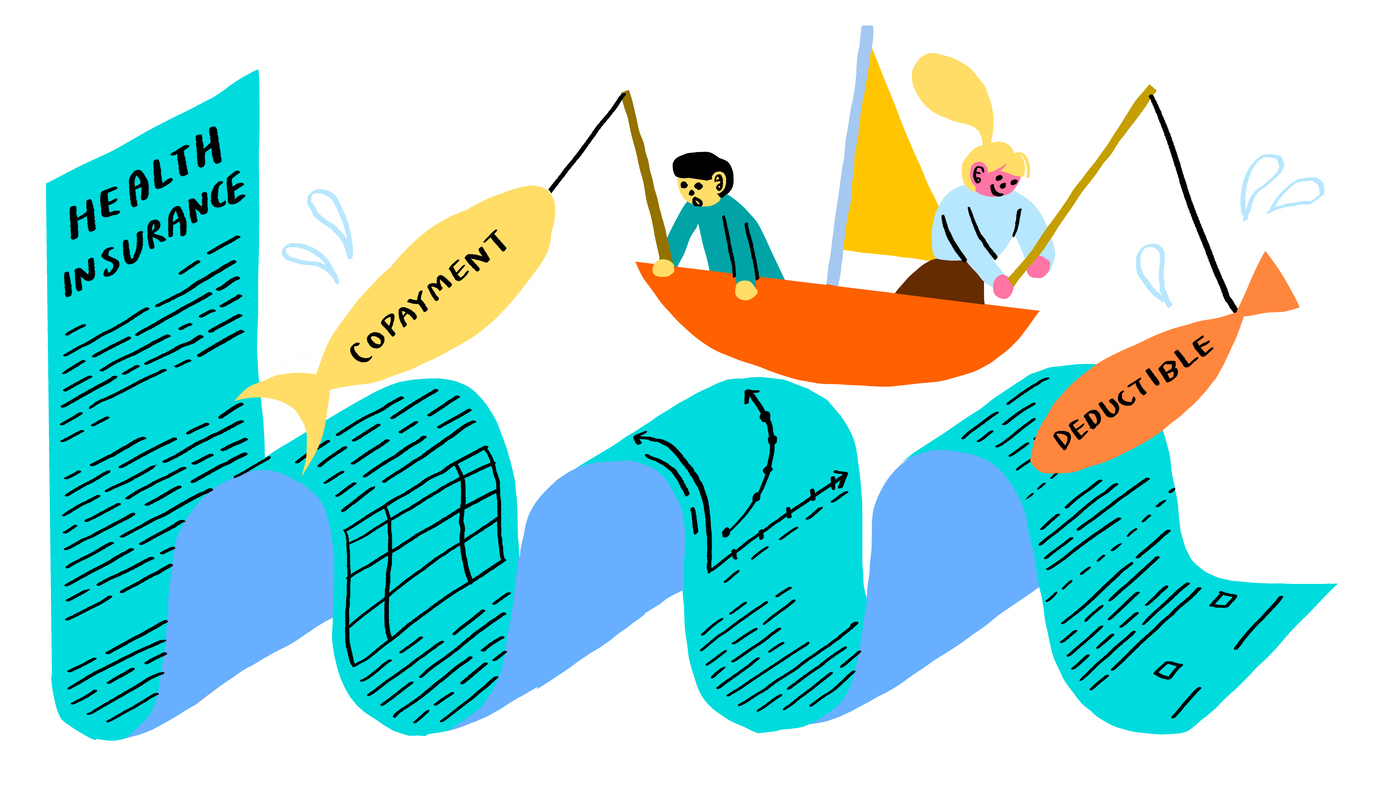
A long document labeled "health insurance" turns into waves as the document stretches across the screen. Two people in a small boat ride the "waves" of the document, fishing for the jargon like "deductible" and "copayment."

If you’re buying health insurance outside a job-based plan, you’re in luck this fall. After years of cutbacks and — some say sabotage — of the Affordable Care Act during the Trump administration, the Biden administration is pulling out the stops to help people find good health plans on HealthCare.gov right now — the open enrollment period starts this week. You will have more time to sign up, more free help choosing a plan, and a greater likelihood you’ll be eligible for subsidies to help keep down the costs of a health plan you buy via the ACA marketplace.

Still, picking health insurance can be hard work, even if you’re choosing a plan through your employer. There are a lot of confusing terms, and the process forces you to think hard about your health and your finances. Plus you have to navigate all of it on a deadline, often with only a few-week period to explore your options and make decisions.

Whether you’re aging out of your parent’s plan and picking one for the first time, or you’re in a plan that no longer works for you and you’re ready to switch things up, or you’re uninsured and want to see if you have any workable options, there’s good news. Asking yourself a few simple questions can help you zero in on the right plan from all those on the market.

Here are some tips on where to look and how to get trustworthy advice and help if you need it.

Tip #1: Know where to go

It’s not always obvious where to look for health insurance. “In this country it is a truly wacky patchwork quilt of options,” says Sabrina Corlette, who co-directs the Center on Health Insurance Reform at Georgetown University.

If you’re 65 or older, you’re eligible for Medicare. It’s a federally run program — the government pays for much of your health care. You might also be eligible if you have certain disabilities. For those already enrolled in Medicare or in a Medicare Advantage plan, the open enrollment period to switch up your supplemental health and prescription drug plans for 2022 runs through Dec. 7 this year.

For those under age 65, Corlette says, “the vast majority of us get our coverage through our employer. The employer typically will cover between 70% and 90% of your premium costs, which is pretty nice.”

Read More

Rise of syphilis in the U.S reflects neglect of long-term public health funding : Shots

Rise of syphilis in the U.S reflects neglect of long-term public health funding : Shots

Mai Yang, a communicable disease specialist, searches for Angelica, a 27 year-old pregnant woman who tested positive for syphilis, in order to get her treated before she delivers her baby.

Talia Herman for ProPublica


hide caption

toggle caption

Talia Herman for ProPublica


Mai Yang, a communicable disease specialist, searches for Angelica, a 27 year-old pregnant woman who tested positive for syphilis, in order to get her treated before she delivers her baby.

Talia Herman for ProPublica

When Mai Yang is looking for a patient, she travels light. She dresses deliberately — not too formal, so she won’t be mistaken for a police officer; not too casual, so people will look past her tiny 4-foot-10 stature and youthful face and trust her with sensitive health information. Always, she wears closed-toed shoes, “just in case I need to run.”

This story comes from ProPublica, a nonprofit newsroom that investigates abuses of power. Sign up to receive their biggest stories as soon as they’re published.

Yang carries a stack of cards issued by the Centers for Disease Control and Prevention that show what happens when the Treponema pallidum bacteria invades a patient’s body. There’s a photo of an angry red sore on a penis. There’s one of a tongue, marred by mucus-lined lesions. And there’s one of a newborn baby, its belly, torso and thighs dotted in a rash, its mouth open, as if caught midcry.

It was because of the prospect of one such baby that Yang found herself walking through a homeless encampment on a blazing July day in Huron, Calif., an hour’s drive southwest of her office at the Fresno County Department of Public Health.

She was looking for a pregnant woman named Angelica, whose visit to a community clinic had triggered a report to the health department’s sexually transmitted disease program. Angelica had tested positive for syphilis. If she was not treated, her baby could end up like the one in the picture or worse — there was a 40% chance the baby would die.

Yang knew, though, that if she helped Angelica get treated with three weekly shots of penicillin at least 30 days before she gave birth, it was likely that the infection would be wiped out and her baby would be born without any symptoms at all. Every case of congenital syphilis, when a baby is born with the disease, is avoidable. Each is considered a

Read More

CDC advisers back Moderna and J&J COVID vaccine boosters : Shots

CDC advisers back Moderna and J&J COVID vaccine boosters : Shots

A health care worker administers a Pfizer-BioNTech COVID-19 vaccine Thursday at Life of Hope Center in New York City.

Michael M. Santiago/Getty Images


hide caption

toggle caption

Michael M. Santiago/Getty Images


A health care worker administers a Pfizer-BioNTech COVID-19 vaccine Thursday at Life of Hope Center in New York City.

Michael M. Santiago/Getty Images

The Centers for Disease Control and Prevention is backing the roll out of Moderna and Johnson & Johnson COVID-19 vaccine boosters in line with the Food and Drug Administration’s authorizations issued Wednesday. The CDC is also supporting a mix-and-match approach to booster vaccination.

CDC director Rochelle Walensky called the recommendations an “example of our fundamental commitment to protect as many people as possible from COVID-19.”

The announcement came just hours after the CDC’s vaccine advisory committee voted unanimously in favor of booster doses.

For Moderna, the panel said a booster should be given to people on the same terms as the Pfizer-BioNTech booster. That would cover people 65 and older, people 18 and older in long-term care settings and people 50 to 64 with relevant underlying medical conditions. The booster may be given to people 18 to 49 years with certain medical conditions and to people 18 to 64 who have COVID-19 risks related to their work or who live in certain institutional settings.

For Johnson & Johnson, the panel’s advice was simpler: A booster is recommended for people 18 and older at least two months after their initial immunization.

A CDC presentation and draft voting language said that the same vaccine used for initial immunization should be used as a booster dose but that a mix-and-match approach is OK when the primary vaccine isn’t available or a different vaccine is preferred.

During the committee discussions, several members pushed back against this preference for boosting with the same vaccine. They argued that a more permissive approach to mix-and-match would ease the administration of booster doses.

After a brief break late in the deliberations, CDC staff returned with revised voting questions that were neutral on which vaccine should be used as a booster for the J&J and Moderna vaccines. The revised questions don’t explicitly mention which vaccine should be used as a booster, which clears the way for mix-and-match boosting without restrictions.

According to the CDC, more than 189 million people in the U.S. are fully vaccinated, about 57% of the population. Hospitalization rates are nine to

Read More

Pandemic increases mortality risk for people with mental health issues

Pandemic increases mortality risk for people with mental health issues
healthcare worker walking quickly through a hospital corridorShare on Pinterest
The pandemic increased mortality rates in people with mental health issues compared with people without. JGI/Tom Grill/Getty Images
  • A study finds that people with mental health issues or intellectual disabilities have been far more likely to die during the pandemic than others.
  • More people in these groups have died of COVID-19 and other causes.
  • There are likely several reasons for this disparity.

According to a new study, people in the U.K. with mental health issues and intellectual disabilities were at about twice the risk of dying than people without those conditions before the COVID-19 pandemic.

The study suggests this difference has increased dramatically during the pandemic, with people with mental health conditions and intellectual disabilities experiencing much higher death rates.

The current study considered “excess deaths,” a general category of deaths during a particular period compared with historical levels.

Says the study’s lead author, Dr. Jayati Das-Munshi of King’s College London in the United Kingdom:

“The results from our study paint a stark picture of how the existing vulnerability of those with mental health conditions and intellectual disabilities has worsened during the COVID-19 pandemic. The higher death rates compared [with] the general population were associated with more deaths from [SARS-CoV-2] infection itself, as well as deaths from other causes.”

Dr. Thomas F. Betzler, executive clinical director of the Montefiore Behavioral Health Center in New York, who was not involved in the study, confirmed for Medical News Today that “many of our patients have similar issues.”

Dr. Das-Munshi says the study’s findings warrant a reappraisal of the groups understood to be at high risk of dying from COVID-19:

“People living with severe mental health conditions and intellectual disabilities should be considered a vulnerable group at risk of COVID-19 mortality — as well as deaths from other causes — throughout the pandemic. We suggest a need to prioritize vaccination and optimize physical healthcare and suicide risk reduction before, during, and after peaks of [SARS-CoV-2] infection in people living with mental health conditions.”

The study appears in The Lancet Regional Health Europe.

The study’s analysis found an increased likelihood of dying among people with mental health issues and intellectual disabilities in the U.K. during the first COVID-19 lockdown compared with the general population.

Specifically, they found that:

  • People with intellectual disabilities were 9.24 times more likely to die of COVID-19.
  • People with eating disorders were 4.81 times
Read More