Association between healthy lifestyle and memory decline in older adults: 10 year, population based, prospective cohort study

Association between healthy lifestyle and memory decline in older adults: 10 year, population based, prospective cohort study

Abstract

Objective To identify an optimal lifestyle profile to protect against memory loss in older individuals.

Design Population based, prospective cohort study.

Setting Participants from areas representative of the north, south, and west of China.

Participants Individuals aged 60 years or older who had normal cognition and underwent apolipoprotein E (APOE) genotyping at baseline in 2009.

Main outcome measures Participants were followed up until death, discontinuation, or 26 December 2019. Six healthy lifestyle factors were assessed: a healthy diet (adherence to the recommended intake of at least 7 of 12 eligible food items), regular physical exercise (≥150 min of moderate intensity or ≥75 min of vigorous intensity, per week), active social contact (≥twice per week), active cognitive activity (≥twice per week), never or previously smoked, and never drinking alcohol. Participants were categorised into the favourable group if they had four to six healthy lifestyle factors, into the average group for two to three factors, and into the unfavourable group for zero to one factor. Memory function was assessed using the World Health Organization/University of California-Los Angeles Auditory Verbal Learning Test, and global cognition was assessed via the Mini-Mental State Examination. Linear mixed models were used to explore the impact of lifestyle factors on memory in the study sample.

Results 29 072 participants were included (mean age of 72.23 years; 48.54% (n=14 113) were women; and 20.43% (n=5939) were APOE ε4 carriers). Over the 10 year follow-up period (2009-19), participants in the favourable group had slower memory decline than those in the unfavourable group (by 0.028 points/year, 95% confidence interval 0.023 to 0.032, P<0.001). APOE ε4 carriers with favourable (0.027, 95% confidence interval 0.023 to 0.031) and average (0.014, 0.010 to 0.019) lifestyles exhibited a slower memory decline than those with unfavourable lifestyles. Among people who were not carriers of APOE ε4, similar results were observed among participants in the favourable (0.029 points/year, 95% confidence interval 0.019 to 0.039) and average (0.019, 0.011 to 0.027) groups compared with those in the unfavourable group. APOE ε4 status and lifestyle profiles did not show a significant interaction effect on memory decline (P=0.52).

Conclusion A healthy lifestyle is associated with slower memory decline, even in the presence of the APOE ε4 allele. This study might offer important information to protect older adults against memory decline.

Introduction

Although a fundamental function of daily life, memory continuously declines as people age,1 impairing both life quality

Read More

Corewell Health has tips to create a healthy lifestyle

Corewell Health has tips to create a healthy lifestyle

GRAND RAPIDS, Mich. (WOOD) – If your New Years Resolution includes losing weight or getting healthier. Creating a lifestyle that promotes good health can seem complicated. We may know what we should do but how do we create healthier habits? Corewell Health, the new name for Spectrum Health is making it easier by offering a program, called Lifestyle Medicine. Dr. Kristi Artz, emergency medicine physician and medical director of Lifestyle Medicine at Corewell Health joins us now.

>>>Take a look!

Corewell Health Lifestyle Medicine

616-486-0385
SpectrumHealth.org/LifestyleMedicine

Sponsored by Corewell Health.

/** * On DOM Ready! */ $(function(){ // GLOBAL $('#custom-css-wood').appendTo( 'head' ); // fix article bin layout $('#main.widget:not(.article-list--story-grid)').parent().css( flex : '1 0 100%', maxWidth : '100%', ); var subsite = window.location.pathname.replace(/^\/([^\/]*).*/g,'$1'); subsite = Object.keys(siteSocial).includes(subsite) ? subsite : 'wood'; $('#page').addClass( `site-is-set site-is-$subsite site-is-$'wood' === subsite ? 'main' : 'subsite'` ); if ( 'wotv4women' !== subsite ) // scripts for WOOD //$('#menu-item-62972').nextAll().remove(); //$('#menu-item-62972').remove(); else // scripts for WOTV // Reveal navigation //$('#menu-item-62972').prevAll().remove();

var $social = $('#auto-fb-tw-social-feed-widgets'); if ( $social ) page\-id)\-([0-9]+).*$/, '$2' )); var facebook = getSocial(FB, category, subsite); var twitter = getSocial(TW, category, subsite); if ( !facebook && !twitter ) facebook = siteSocial[subsite].fb; twitter = siteSocial[subsite].tw;

var $div = $( document.createElement('div') ); facebook && $social.append( $div.clone() .addClass(`afb-$subsite-$facebook`) .html( `…

Read More

Can a Healthy Lifestyle Prevent IBD?

Can a Healthy Lifestyle Prevent IBD?

Adopting and maintaining a healthy lifestyle may prevent inflammatory bowel disease (IBD), according to findings from an analysis of three prospective U.S. cohort studies, which were validated in three external European cohorts.

In the primary analysis, maintaining low modifiable risk scores — based on risk factors including body mass index, smoking status, use of non-steroidal anti-inflammatory drugs, physical activity, and daily consumption of fruit, vegetables, fiber, polyunsaturated fatty acids, and red meat — could have prevented 42.9% of Crohn’s disease cases and 44.4% of ulcerative colitis cases, reported Hamed Khalili, MD, MPH, of Massachusetts General Hospital in Boston, and colleagues.

Moreover, adherence to a healthy lifestyle could have prevented 61.1% of Crohn’s disease cases and 42.2% of ulcerative colitis cases, they noted in Gut.

“We were surprised by the proportion of cases that could have been prevented through lifestyle modifications,” Khalili told MedPage Today. “One reason for this finding may be that our population was older and therefore most of our cases of IBD happened in older adults.”

“We know that lifestyle and environmental factors play a bigger role in the development of IBD in this population as compared to those who are diagnosed with disease earlier in life,” he added.

These findings from the Nurses’ Health Study (NHS), the NHS II, and the Health Professionals Follow-Up Study (HPFS) were largely validated in three external European cohorts — the Swedish Mammography Cohort, Cohort of Swedish Men, and the European Prospective Investigation into Cancer and Nutrition.

Looking at cases of Crohn’s disease among the European validation cohorts, adhering to low-risk factors could have prevented 44% to 51% of cases, while adhering to a healthy lifestyle could have prevented 49% to 60% cases. For ulcerative colitis, adherence to low-risk factors could have prevented 21% to 28% of cases, while healthy lifestyle adherence could have prevented 47% to 56% of cases.

For every 1-point increase in modifiable risk score, a higher risk of Crohn’s disease (P for trend<0.0001) and ulcerative colitis (P for trend=0.008) was observed, and was similar for men and women.

IBD affects about 3.1 million people in the U.S. and 1.3 million in Europe, with incidence rising globally, especially among newly industrialized countries, Khalili’s group said. IBD is associated with an annual healthcare cost of $23,000 per patient in the U.S., and there are no current strategies to prevent the development of IBD. While one approach

Read More

Healthy Men: Why men are the way they are | Lifestyle

Healthy Men: Why men are the way they are | Lifestyle

Dear Heathy Men: You’ve mentioned several times in this column that men don’t go to the doctor as often as women and that they live shorter, sicker lives than women. I’m sure that’s true. But what I really want to know is why. Why don’t men take better care of themselves?

A: A number of factors keep men (and boys) from being as actively engaged in their own health care as they need to be. Here are some of the biggest ones:

— Socialization. When we’re little, boys are bombarded with the idea that “big boys don’t cry.” When we’re in high school, we’re told we need to “take one for the team.” And when we hit adulthood, it’s “man up.” Overall, the message is clear: Asking for and/or accepting help is a sign of weakness. Not surprisingly, men and boys ignore their symptoms and stay as far away from medical providers as they can.

— Media messages. In a comprehensive study of print advertising for health products and healthy lifestyles, Dr. Salvatore J. Giorgianni, Jr. found that ads were half as likely to be directed at men than at women. “This sends a clear message to boys and young men that (a) only women and girls have health-related needs, and (b) taking care of one’s physical or mental health is women’s responsibility,” says Giorgianni, co-founder and vice president of Healthy Men, Inc. (healthymen.org).

— The health care system is unwelcoming. A 2019 Cleveland Clinic survey found that going to the doctor is “so unappealing” that 7 in 10 men would rather do household chores, like cleaning the bathroom or mowing the lawn, than go to the doctor, and 77% would rather go shopping with their wife or significant other than to the doctor. As a result, about two-thirds of men prefer to self-diagnose and the same percentage will wait as long as possible before finally agreeing to see a provider. By then, it’s often too late.

Some of the blame for men’s experience of being unwelcome and uncomfortable in health care settings rests with providers. A majority of men in the 2019 survey said they would be more likely to have regular checkups if medical offices had more flexible hours. But even when they do make an office visit, according to researcher Will Courtenay’s “Dying to Be Men: Psychosocial, Environmental, and Biobehavioral Decisions in Promoting the Health of Men

Read More

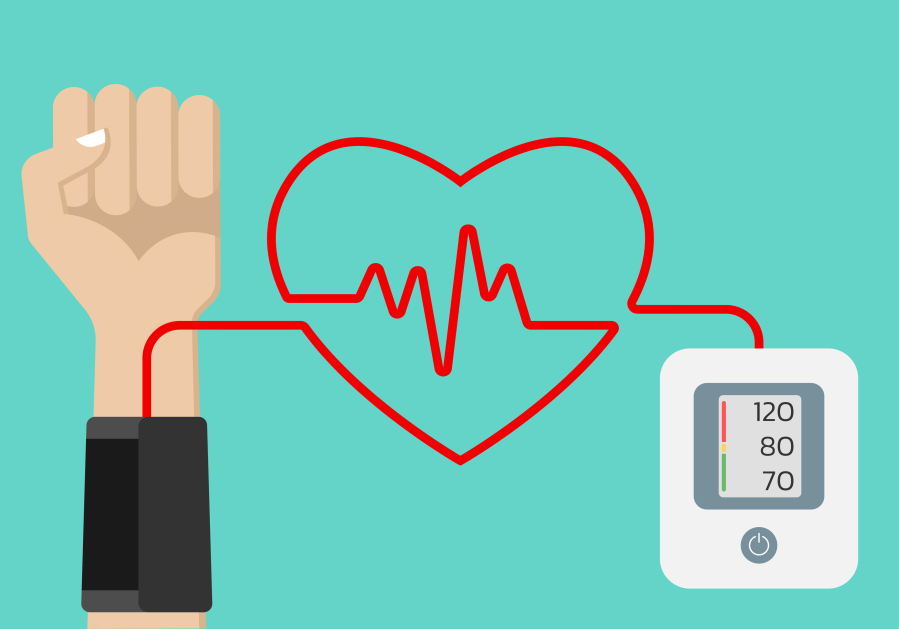
Northwest doctors say: Keep blood pressure in check with healthy lifestyle, testing at home

Northwest doctors say: Keep blood pressure in check with healthy lifestyle, testing at home

Because it draws zero attention to itself, high blood pressure — the technical term is hypertension — seems to be the easiest to shrug off of all ongoing health conditions in American adults.

It’s symptomless. It’s sneaky. A trivial paper cut will cause you more pain and suffering than this important aspect of your health.

Nearly half of all American adults have high blood pressure, according to the American Heart Association, and many don’t even know it.

But hypertension doesn’t stay symptomless forever, according to Dr. Noreen Nazir, a preventive cardiologist at Oregon Health & Science University.

“In the early stages, you can have elevated numbers but no sustained symptoms,” Nazir said. “The body is trying to compensate. It can do this for a time but you may be on your way to developing symptoms and developing negative outcomes later on.”

Avoid ‘Holiday Heart’

The holiday season is when we tend to eat and drink with abandon. Doctors have a name for seasonally troubled cardiovascular systems: “holiday heart.” If you’re trying to keep your blood pressure in check despite holiday treats and peer pressure, try these tips:

  • Before you hit that party, snack healthily and include protein. You’ll be less inclined to gorge.
  • At the party, start with a glass of water. Delay and reduce alcohol.
  • Keep exercising. In addition to keeping your blood pressure better regulated, it’ll reduce stress and keep your spirits bright.
  • Stick with your meds. If you tend to forget, get a weekly pill organizer.
  • Be careful with over-the-counter cold and flu meds, which can raise blood pressure. Read labels. 

According to the American Heart Association, chronic hypertension — that is, blood pressure that stays too high for too long — increases one’s risk of heart attack, stroke and a host of other health problems, from heart and kidney disease to vision loss and sexual dysfunction.

“Most people experience very little symptoms until it’s too late,” said Dr. Richard Segal, an internal medicine specialist at Kaiser Permanente in Salem, Ore.

Heart disease is the No. 1 cause of death for adults in the United States, according to the Centers for Disease Control and Prevention. Stroke is No. 5.

“Worldwide, raised blood pressure is estimated to cause 7.5 million deaths, about 12.8 percent of the total of all deaths,” according to the World Health Organization.

That’s why it’s important to get screened, understand what your numbers mean

Read More

Joe Rogan unloads on ‘fat’ professors who say healthy eating is offensive: ‘F— off’

Joe Rogan unloads on ‘fat’ professors who say healthy eating is offensive: ‘F— off’

Joe Rogan slammed “fat professors” who defend unhealthy lifestyles in a Saturday episode of “The Joe Rogan Experience.” 

“F— off fat professors, f— off, you guys are unhealthy, it’s not in any way good,” Rogan said. 

Rogan’s guest was fitness influencer Derek of the “More Plates, More Dates” YouTube channel, where the two appeared to reference a document from the University of British Columbia in Canada. The document defended the removal of nutritional information from menus because putting the number of calories next to an item can be “triggering” for some students.

“It can be triggering for those with disordered eating habits or eating disorders,” the document to students read. “For those of us who have a rocky relationship with food, either in the past or present, it can be triggering when we are presented with caloric information, and it can affect our ability to repair our relationship with food. By stepping away from nutrition information, we can place a greater focus on the enjoyment of food and creating a satisfying experience.”

OBESTIY: MORE THAN HALF OF YOUNG ADULTS ARE OVERWEIGHT, STUDY SAYS

Podcast giant Joe Rogan has arguably become world-famous by having honest conversations with guests about a variety of topics. 

Podcast giant Joe Rogan has arguably become world-famous by having honest conversations with guests about a variety of topics. 
(Photo by: Vivian Zink/Syfy/NBCU Photo Bank/NBCUniversal via Getty Images)

Derek described how the university “removed all of the nutritional information apparently from the foods the students were getting on their meal plans, because it was ‘too triggering’ to show the calories.” 

He continued, “it presents this f—ed up scenario where you can’t even self-regulate, even the individuals who want to stay at a healthy weight, you can’t even figure out what the f— you’re eating.”

PEOPLE ARE LOSING WEIGHT FOR THE HEALTH BENEFITS, NOT FOR PHYSICAL APPEARENCE: MAYO CLINIC SURVEY

Rogan recalled a viral video showing a female professor, “talking about [how] avoiding certain foods is just ‘fatphobic’ and ‘it’s not based in science.’” He also remembered the woman saying, “you shouldn’t deny yourself donuts” and “to call some food ‘junk food’ is incorrect.”

Obese person measuring his belly.

Obese person measuring his belly.
(Credit: iStock)

“How are you ever speaking publicly on this?” Rogan wondered. 

Rogan criticized the idea that people are disturbed by “actual data” presented about the foods they are choosing to eat, and suggested that it, “doesn’t mean anybody should tell you what you should or shouldn’t do, but you should know.”

The host suggested that by demonizing

Read More