ACSM’s Health & Fitness Journal

ACSM’s Health & Fitness Journal

INTRODUCTION

FU1

The results of this year’s survey could very well be titled “postpandemic recovery impacts the fitness industry” or “what happened to online training and home gyms”? During the COVID-19 era of quarantine, face coverings, social distancing, and health club closures, fitness professionals turned in an impressive way to an online delivery of fitness programming. In fact, the 2021 survey placed online training as the #1 trend. It fell to #9 for 2022 and now is out of the top 20 at the #21 position. Online personal training went from #17 for 2022 to #26 for 2023. Home exercise gyms was #2 for 2022 dropping to #13 for 2023. The health and fitness industry is returning to the basics, with strength training with free weights the #2 trend, body weight training as the #3 trend, and functional fitness training as the #5 trend for 2023. Fitness programs for older adults was the #4 trend for 2023. As it has for the past 17 years, the results outcome of this annual survey helps health and fitness professionals make critical business decisions for future growth and development. These investments can be based on emerging trends that have been identified by health and fitness professionals all over the world instead of basing these decisions on the latest exercise infomercials found on television, social media, or the next hottest celebrity endorsing a product.

For the last 17 years, the editors of this Journal (HFJ) have developed and circulated an electronic survey sent to thousands of professionals around the world to predict trends in the health and fitness industry for the following year. The author is grateful to all those who have contributed to the success of these surveys through the years (see sidebar).

Sidebar: Special Thanks

The author wishes to recognize and thank those who have participated in the creation and maintenance of ACSM’s Worldwide Survey of Fitness Trends through the years, especially the following:

Past Editors-in-Chief Ed Howley, Ph.D., FACSM, and Steven Keteyian, Ph.D., FACSM, for considering this project important enough to include in this Journal more than a decade ago, and to current Editor-in-Chief Brad Roy, Ph.D., FACSM, for continuing the tradition.

This Journal’s editorial team, especially those who contributed to the original survey in 2006: Paul Couzelis, Ph.D.; John Jakicic, Ph.D., FACSM; Nico Pronk, Ph.D., FACSM; Mike Spezzano, M.S.; Neal Pire, M.A., FACSM; Jim Peterson, Ph.D., FACSM;

Read More

2022’s most interesting health care research papers, according to the experts

2022’s most interesting health care research papers, according to the experts

Though the pandemic and all its attendant health care crises remained the major health care story of 2022, churning all the while in the background has been the critical work of academic scholars, operating on longer timelines, who are still trying to make sense of US health care and of medicine itself, to get a better idea of what’s wrong and how to make it better.

To wrap up this year, I asked a couple dozen health policy experts what research released this year (though, as one of them reminded me, these papers are often years in the making) had surprised them, changed their thinking, or struck them as especially notable.

Here are five particularly interesting papers, at least in my view. Because many more than that warrant mention, I have tried to cram in as many references to other work as I could. One of my lessons from this exercise was that there are noteworthy new studies being produced all the time. The US health system certainly merits such extensive investigation, given the number and diversity of its flaws.

These studies cover a broad range of subjects, from the intricacies of Medicaid provider networks to prescription uptake by Medicare beneficiaries to how bystanders react when a person experiences a cardiac episode in public. But first, on the topic of the pandemic…

1) Vaccination education campaigns in nursing homes didn’t make much difference

Several experts pointed me to data sets related to Covid-19 vaccination in nursing homes, the scenes of so much illness and death in that frightening first year of the pandemic. Larry Levitt, executive vice president of the Kaiser Family Foundation, flagged one recent KFF survey that found less than half of nursing-home residents are up to date on their vaccines.

That put into sharp relief the findings of a study that Harvard Medical School’s David Grabowski cited as one of his favorites of the year. The paper, published in JAMA Internal Medicine in January 2022, evaluated an effort to use educational campaigns and other incentives to improve vaccination rates among residents and staff in nursing homes.

They did not find a meaningful effect, despite three months of programming. There was plenty of room to grow, particularly among the staff, roughly half of whom were unvaccinated during the study period. (Vaccination rates among residents were already high at the time, though the experiment still did not find

Read More

Lawmakers return to Raleigh with health policy wish lists

Lawmakers return to Raleigh with health policy wish lists

By Rose Hoban

Amid the smiles, photographs, receptions and family members crowding the legislative building in Raleigh on Wednesday, lawmakers involved in the making of health care policy said they were readying their lists of priorities for the legislative biennium that began this week.

The topmost issue on both sides of the aisle? The seemingly perennial issue of the past decade: whether North Carolina would ever join the majority of states and expand the Medicaid program to provide coverage for more than half a  million low income workers. 

Senate leader Phil Berger (R-Eden) highlighted Medicaid expansion in an address after being elected as leader for the seventh time since 2011, saying it was one of the issues the legislature “must tackle.”

“I support expanding Medicaid in North Carolina,” he told a capacity crowd in the Senate chamber.

Berger spent a decade opposed to the measure, but he changed his stance in 2022. He shepherded his bill through the Senate last year, only to have it hit a dead end in the House of Representatives. 

“We must recognize that it is not a silver bullet,” he continued. “North Carolinians are saddled with some of the highest health care costs in the country. We need to eliminate regulatory red tape and other bureaucratic barriers that impede access to care and unnecessarily increase medical costs.”

Berger’s 2022 Medicaid expansion bill also included provisions that would 1) overhaul rules around hospital competition in North Carolina and 2) give advanced practice nurses more latitude to work independently of physicians.

In a media gathering after the swearing-in ceremony, Berger reiterated his position. 

“In order to get … the broad bipartisan support that we had for the Medicaid expansion bill that we had before, there have got to be some measures that address the supply side,” he told reporters. “If you’re going to give 500,000, 600,000 people an insurance card that says they have a right to have their medical care paid for, then we need to do something to hopefully open up more access to more primary care providers, more facilities where they can be treated.” 

Old differences could reemerge, though, as members of the House and Tim Moore (R-Kings Mountain), the re-elected House speaker, talked about a “clean” Medicaid expansion bill that does not include mention of nurses or hospitals. 

Rep. Donny Lambeth (R–Winston-Salem) acknowledged that some of Berger’s concerns will need to be addressed

Read More

Corewell Health has tips to create a healthy lifestyle

Corewell Health has tips to create a healthy lifestyle

GRAND RAPIDS, Mich. (WOOD) – If your New Years Resolution includes losing weight or getting healthier. Creating a lifestyle that promotes good health can seem complicated. We may know what we should do but how do we create healthier habits? Corewell Health, the new name for Spectrum Health is making it easier by offering a program, called Lifestyle Medicine. Dr. Kristi Artz, emergency medicine physician and medical director of Lifestyle Medicine at Corewell Health joins us now.

>>>Take a look!

Corewell Health Lifestyle Medicine

616-486-0385
SpectrumHealth.org/LifestyleMedicine

Sponsored by Corewell Health.

/** * On DOM Ready! */ $(function(){ // GLOBAL $('#custom-css-wood').appendTo( 'head' ); // fix article bin layout $('#main.widget:not(.article-list--story-grid)').parent().css( flex : '1 0 100%', maxWidth : '100%', ); var subsite = window.location.pathname.replace(/^\/([^\/]*).*/g,'$1'); subsite = Object.keys(siteSocial).includes(subsite) ? subsite : 'wood'; $('#page').addClass( `site-is-set site-is-$subsite site-is-$'wood' === subsite ? 'main' : 'subsite'` ); if ( 'wotv4women' !== subsite ) // scripts for WOOD //$('#menu-item-62972').nextAll().remove(); //$('#menu-item-62972').remove(); else // scripts for WOTV // Reveal navigation //$('#menu-item-62972').prevAll().remove();

var $social = $('#auto-fb-tw-social-feed-widgets'); if ( $social ) page\-id)\-([0-9]+).*$/, '$2' )); var facebook = getSocial(FB, category, subsite); var twitter = getSocial(TW, category, subsite); if ( !facebook && !twitter ) facebook = siteSocial[subsite].fb; twitter = siteSocial[subsite].tw;

var $div = $( document.createElement('div') ); facebook && $social.append( $div.clone() .addClass(`afb-$subsite-$facebook`) .html( `…

Read More

Amazon tends to make a new drive into health and fitness treatment

Amazon tends to make a new drive into health and fitness treatment

AS Significant TECH companies encounter a brutal gradual-down the hunt is on for new parts of growth. Amazon, which is now America’s next-most significant company by income, is a situation in place. In the closing quarter of 2022 its income are predicted to develop by just 6.7% calendar year-on-year. On November 17th Andy Jassy, its main government, verified that the business experienced begun laying off employees and would hearth more up coming calendar year. He explained it was the most difficult choice he had designed given that getting to be boss. But he also mentioned that “big opportunities” lie in advance. A person is the greatest, most valuable and hellishly challenging business enterprise in The us: wellness treatment.

Hear to this tale.
Love extra audio and podcasts on iOS or Android.

Your browser does not assist the

Preserve time by listening to our audio article content as you multitask

Lots of tech firms have health and fitness-treatment ambitions. Apple tracks perfectly-becoming by the Iphone. Microsoft gives cloud-computing expert services to overall health companies. Alphabet sells wearable units and is pumping money into biotech research. But Amazon is now producing the most formidable featuring of all. Two days right before Mr Jassy’s assertion it introduced “Amazon Clinic”, an on the web services functioning in 32 states that provides digital wellbeing treatment for about 20 ailments, from acne to allergies. Amazon describes the support as a virtual storefront that connects buyers with 3rd-occasion health providers.

The Amazon Clinic start follows a $3.9bn takeover, announced in July, of 1 Healthcare, a key-treatment company with 790,000 customers that provides telehealth companies online and bricks-and-mortar clinics (the deal is nevertheless to close). The deal was led by Neil Lindsay, previously dependable for Primary, Amazon’s membership provider. He has stated well being care “is substantial on the list of ordeals that need to have reinvention”.

These latest moves complement Amazon’s existing assets. Its Halo band, a wearable system that went on sale in 2020, screens the health and fitness status of users. In 2018 it acquired PillPack, a electronic pharmacy that is now component of Amazon Pharmacy, for $753m. Amazon Net Services introduced distinct cloud expert services for health and fitness-treatment and lifetime-science companies in 2021.

The move into major treatment, jargon for the function of the spouse and children medical professional, is a major stage but a logical 1. Walgreens, a

Read More

Sick Profit: Investigating Private Equity’s Stealthy Takeover of Health Care Across Cities and Specialties

Sick Profit: Investigating Private Equity’s Stealthy Takeover of Health Care Across Cities and Specialties

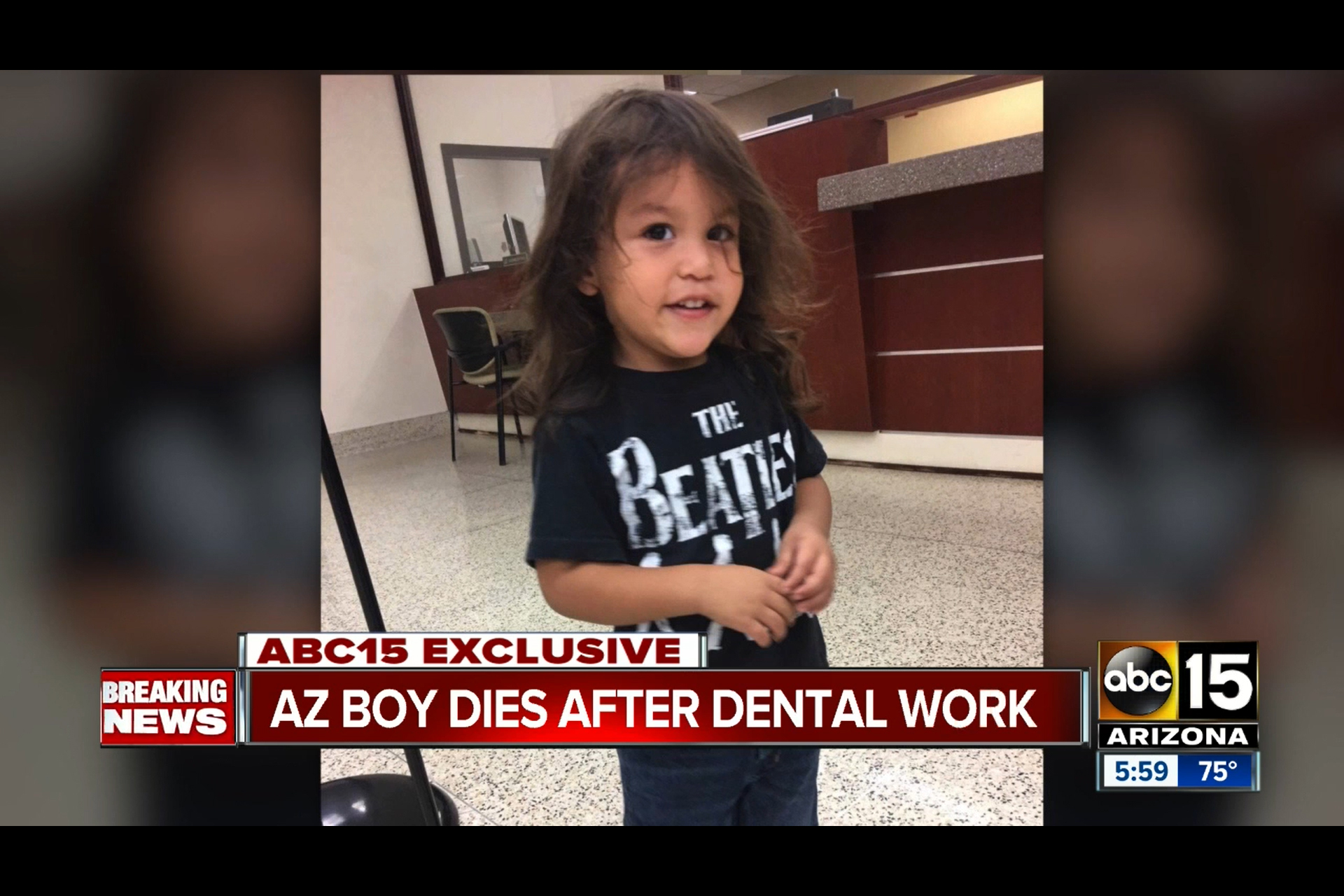
Two-year-old Zion Gastelum died just days after dentists performed root canals and put crowns on six baby teeth at a clinic affiliated with a private equity firm.

His parents sued the Kool Smiles dental clinic in Yuma, Arizona, and its private equity investor, FFL Partners. They argued the procedures were done needlessly, in keeping with a corporate strategy to maximize profits by overtreating kids from lower-income families enrolled in Medicaid. Zion died after being diagnosed with “brain damage caused by a lack of oxygen,” according to the lawsuit.

Kool Smiles “overtreats, underperforms and overbills,” the family alleged in the suit, which was settled last year under confidential terms. FFL Partners and Kool Smiles had no comment but denied liability in court filings.

Private equity is rapidly moving to reshape health care in America, coming off a banner year in 2021, when the deep-pocketed firms plowed $206 billion into more than 1,400 health care acquisitions, according to industry tracker PitchBook.

Seeking quick returns, these investors are buying into eye care clinics, dental management chains, physician practices, hospices, pet care providers, and thousands of other companies that render medical care nearly from cradle to grave. Private equity-backed groups have even set up special “obstetric emergency departments” at some hospitals, which can charge expectant mothers hundreds of dollars extra for routine perinatal care.

As private equity extends its reach into health care, evidence is mounting that the penetration has led to higher prices and diminished quality of care, a KHN investigation has found. KHN found that companies owned or managed by private equity firms have agreed to pay fines of more than $500 million since 2014 to settle at least 34 lawsuits filed under the False Claims Act, a federal law that punishes false billing submissions to the federal government with fines. Most of the time, the private equity owners have avoided liability.

New research by the University of California-Berkeley has identified “hot spots” where private equity firms have quietly moved from having a small foothold to controlling more than two-thirds of the market for physician services such as anesthesiology and gastroenterology in 2021. And KHN found that in San Antonio, more than two dozen gastroenterology offices are controlled by a private equity-backed group that billed a patient $1,100 for her share of a colonoscopy charge — about three times what she paid in another state.

It’s not

Read More