
Sick Profit: Investigating Private Equity’s Stealthy Takeover of Health Care Across Cities and Specialties

Sick Profit: Investigating Private Equity’s Stealthy Takeover of Health Care Across Cities and Specialties

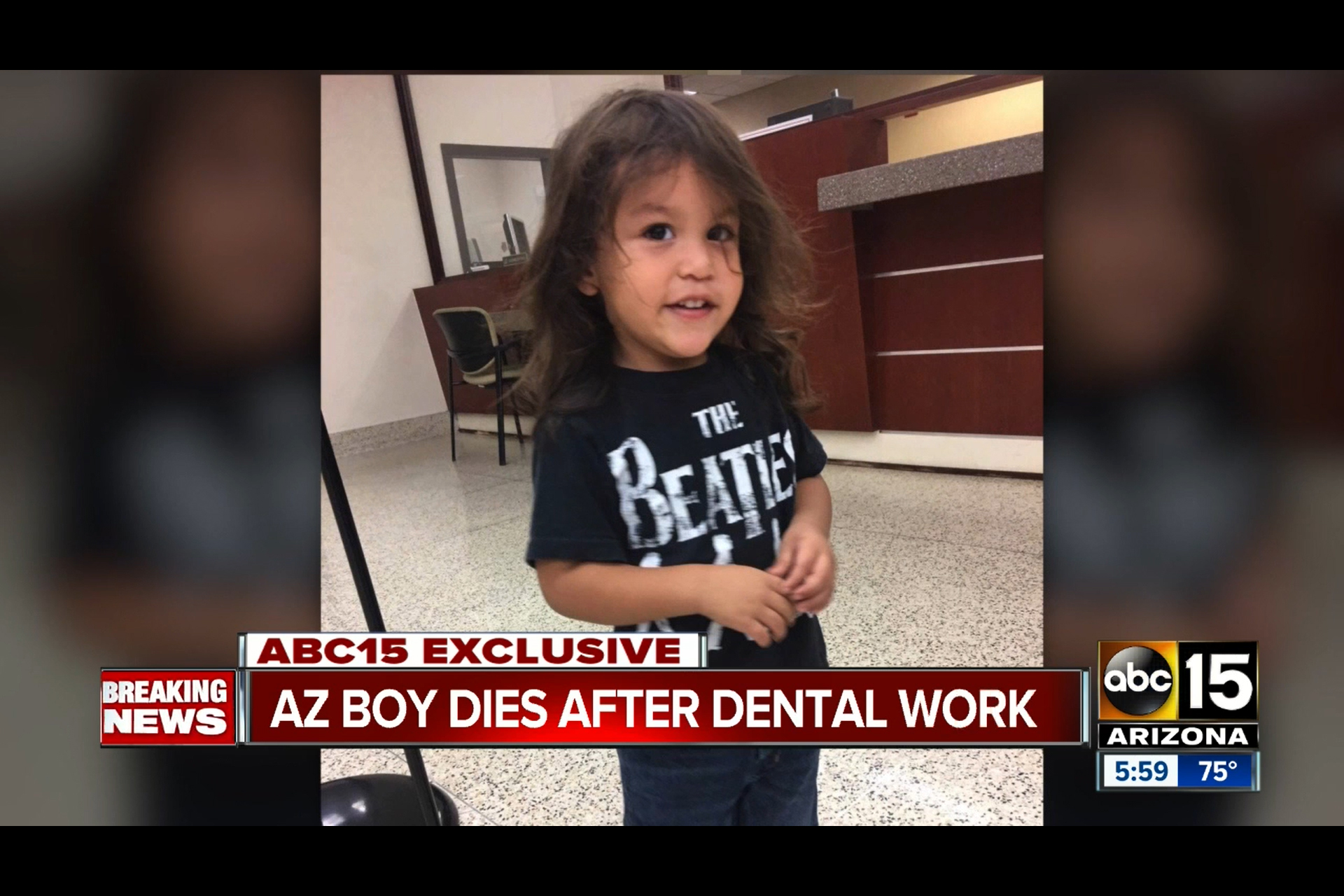
Two-year-old Zion Gastelum died just days after dentists performed root canals and put crowns on six baby teeth at a clinic affiliated with a private equity firm.

His parents sued the Kool Smiles dental clinic in Yuma, Arizona, and its private equity investor, FFL Partners. They argued the procedures were done needlessly, in keeping with a corporate strategy to maximize profits by overtreating kids from lower-income families enrolled in Medicaid. Zion died after being diagnosed with “brain damage caused by a lack of oxygen,” according to the lawsuit.

Kool Smiles “overtreats, underperforms and overbills,” the family alleged in the suit, which was settled last year under confidential terms. FFL Partners and Kool Smiles had no comment but denied liability in court filings.

Private equity is rapidly moving to reshape health care in America, coming off a banner year in 2021, when the deep-pocketed firms plowed $206 billion into more than 1,400 health care acquisitions, according to industry tracker PitchBook.

Seeking quick returns, these investors are buying into eye care clinics, dental management chains, physician practices, hospices, pet care providers, and thousands of other companies that render medical care nearly from cradle to grave. Private equity-backed groups have even set up special “obstetric emergency departments” at some hospitals, which can charge expectant mothers hundreds of dollars extra for routine perinatal care.

As private equity extends its reach into health care, evidence is mounting that the penetration has led to higher prices and diminished quality of care, a KHN investigation has found. KHN found that companies owned or managed by private equity firms have agreed to pay fines of more than $500 million since 2014 to settle at least 34 lawsuits filed under the False Claims Act, a federal law that punishes false billing submissions to the federal government with fines. Most of the time, the private equity owners have avoided liability.

New research by the University of California-Berkeley has identified “hot spots” where private equity firms have quietly moved from having a small foothold to controlling more than two-thirds of the market for physician services such as anesthesiology and gastroenterology in 2021. And KHN found that in San Antonio, more than two dozen gastroenterology offices are controlled by a private equity-backed group that billed a patient $1,100 for her share of a colonoscopy charge — about three times what she paid in another state.

It’s not

Read More

Should I skip Thanksgiving if I feel sick?

Should I skip Thanksgiving if I feel sick?

By Rose Hoban

The number of travelers on the move for the Thanksgiving holiday is up with airports expected to screen as many as 2.5 million passengers nationwide today, and possibly surpass that number on Sunday, Nov. 27, according to the federal Transportation Security Administration.

“We expect to be busier this year than last year at this time, and probably very close to pre-pandemic levels,” said TSA Administrator David Pekoske. “We are prepared to handle the projected increase in travel volumes.”

People are eager to get back to their holiday rituals after years of pandemic restrictions, but what happens if just as the holiday approaches, you find yourself sneezing, sniffling, coughing and maybe even testing positive for a COVID-19 infection? 

“The name of the game for the last couple of years has been COVID, COVID, COVID. And now there’s a lot less masking and a lot less distancing,” said Laura Murray, an intensive care medicine specialist from the Cone Health Medical Group in Greensboro. “People are, you know, rejoicing and being in public together, maybe not being as careful about covering coughs or masking.”

At this point in the pandemic, the worry is likely not so much about COVID, but about the other respiratory viruses that have been circulating with a vengeance. For older friends and family, or people who are immunocompromised, flu and RSV (respiratory syncytial virus) are real dangers.

If you’re sick this week, it’s likely that you’ll be sick on turkey day. So, the question becomes, should you stay at home? Or go? And if you go, how should you act?  

A surge in RSV, flu

Pulmonologist Brad Drummond who works at the main UNC Hospital in Chapel Hill said there’s a steady trickle of coronavirus cases in the intensive care unit, but it’s only one or two beds out of 30. 

“During the Delta wave, it was ‘you’re young and healthy and sick as stink,’” he told NC Health News last week. “The COVID that’s being admitted now is ‘you’re on chemo or have chronic immunocompromised condition.’”

Instead, it’s Flu A that’s making people sick. To him, it felt like it was doubling every week. 

He’s not far off. Positive flu tests went from being about two percent positive  reported to North Carolina’s hospital-based surveillance network in the beginning of October to being 27 percent positive in the week ending Nov. 12. 

“Not all of

Read More

Pursuit of financial gain bodes sick for US health care

Pursuit of financial gain bodes sick for US health care

Healthcare is on my mind, in portion because I have put in considerably of the final two weeks hunting following my spouse pursuing a major operation on his backbone. We were being blessed — he had a great doctor, and we have great well being insurance policy.

But anytime I commit time in the US healthcare program, I arrive away pondering what a quagmire of waste and misaligned incentives it is. I feel which is since the final 50 percent century of financialisation within the business has taken it from remaining a largely charitable assistance to a fat personal current market, ripe for exploitation.

As with so many issues, Individuals get both equally the best and the worst of healthcare. We have accessibility to the most chopping edge therapies (for individuals who can afford to pay for it). We also have a method in which two-thirds of the individuals who declare individual bankruptcy do so in element since of professional medical costs, even just after the passing of the Inexpensive Health care Act (aka Obamacare). And, as every person is aware, the US spends much extra than most of the world on health care, but receives only middling outcomes by OECD criteria.

I fear the bifurcation within just our system is poised to get even worse. Covid and the promise of higher community paying out on healthcare is drawing the sharpest-elbowed traders to an market that doesn’t allocate sources as beautifully as the “invisible hand” of performance would advise that it should really. (Although, frankly, right after 30 a long time of covering company, I’m tricky pressed to feel of an business that does.) The unprecedented sums of dollars sloshing around a complicated and opaque procedure will undoubtedly make the prosperous richer, and the ill sicker.

Private equity in specific is pouring revenue into the healthcare sector, investing $26bn in life sciences and $44bn in health-related products in 2021, the best level in a decade. This follows a 20-fold increase in non-public fairness paying on healthcare specials — such as leveraged buyouts, advancement investments, secondary investments and so on — amongst 2000 and 2018, in accordance to an INET doing work paper unveiled in 2020.

It is fairly clear why personal equity would see an chance in health care, where there’s

Read More