
Sick Profit: Investigating Private Equity’s Stealthy Takeover of Health Care Across Cities and Specialties

Sick Profit: Investigating Private Equity’s Stealthy Takeover of Health Care Across Cities and Specialties

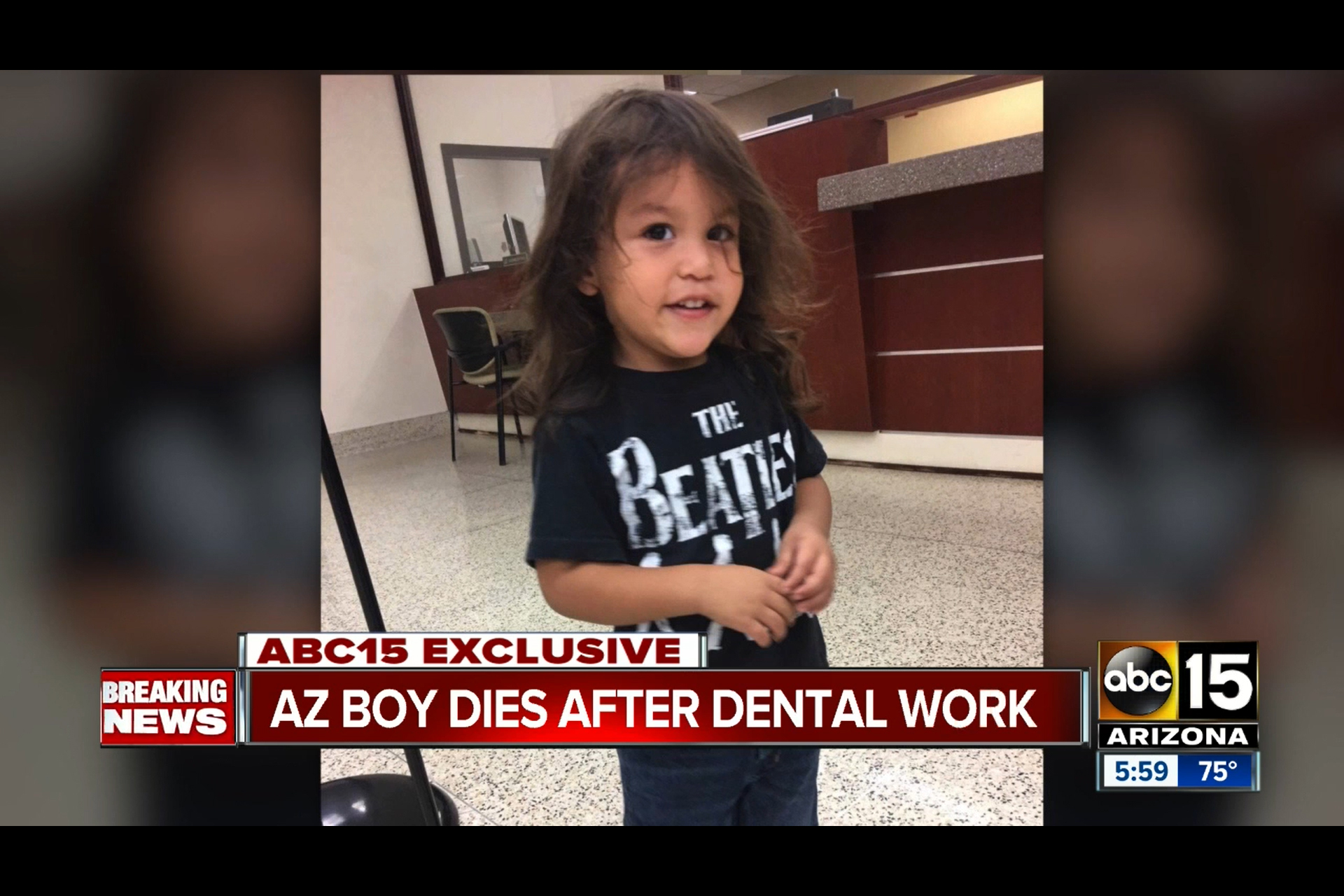
Two-year-old Zion Gastelum died just days after dentists performed root canals and put crowns on six baby teeth at a clinic affiliated with a private equity firm.

His parents sued the Kool Smiles dental clinic in Yuma, Arizona, and its private equity investor, FFL Partners. They argued the procedures were done needlessly, in keeping with a corporate strategy to maximize profits by overtreating kids from lower-income families enrolled in Medicaid. Zion died after being diagnosed with “brain damage caused by a lack of oxygen,” according to the lawsuit.

Kool Smiles “overtreats, underperforms and overbills,” the family alleged in the suit, which was settled last year under confidential terms. FFL Partners and Kool Smiles had no comment but denied liability in court filings.

Private equity is rapidly moving to reshape health care in America, coming off a banner year in 2021, when the deep-pocketed firms plowed $206 billion into more than 1,400 health care acquisitions, according to industry tracker PitchBook.

Seeking quick returns, these investors are buying into eye care clinics, dental management chains, physician practices, hospices, pet care providers, and thousands of other companies that render medical care nearly from cradle to grave. Private equity-backed groups have even set up special “obstetric emergency departments” at some hospitals, which can charge expectant mothers hundreds of dollars extra for routine perinatal care.

As private equity extends its reach into health care, evidence is mounting that the penetration has led to higher prices and diminished quality of care, a KHN investigation has found. KHN found that companies owned or managed by private equity firms have agreed to pay fines of more than $500 million since 2014 to settle at least 34 lawsuits filed under the False Claims Act, a federal law that punishes false billing submissions to the federal government with fines. Most of the time, the private equity owners have avoided liability.

New research by the University of California-Berkeley has identified “hot spots” where private equity firms have quietly moved from having a small foothold to controlling more than two-thirds of the market for physician services such as anesthesiology and gastroenterology in 2021. And KHN found that in San Antonio, more than two dozen gastroenterology offices are controlled by a private equity-backed group that billed a patient $1,100 for her share of a colonoscopy charge — about three times what she paid in another state.

It’s not

Read More

Anti-vaccine group uses telehealth to profit from unproven COVID-19 treatments : Shots

Anti-vaccine group uses telehealth to profit from unproven COVID-19 treatments : Shots

Ben Bergquam was hospitalized with COVID in January. He says he brought his own prescription for ivermectin — an unproven COVID therapy.

Screenshot by NPR/Facebook


hide caption

toggle caption

Screenshot by NPR/Facebook


Ben Bergquam was hospitalized with COVID in January. He says he brought his own prescription for ivermectin — an unproven COVID therapy.

Screenshot by NPR/Facebook

Just before Christmas, a right-wing journalist named Ben Bergquam became seriously ill with COVID-19.

“My Christmas gift was losing my [sense of] taste and smell and having a 105-degree fever, and just feeling like garbage,” Bergquam said in a Facebook video that he shot as he lay in a California hospital.

“It’s scary. When you can’t breathe, it’s not a fun place to be,” he said.

Bergquam told his audience he wasn’t vaccinated, despite having had childhood asthma, a potentially dangerous underlying condition. Instead, he held up a bottle of the drug ivermectin. Almost all doctors do not recommend taking ivermectin for COVID, but many individuals on the political right believe that it works.

The details revealed in Bergquam’s video provide a rare view into the prescription of an unproven COVID-19 therapy. Data shows that prescriptions for drugs like ivermectin have surged in the pandemic, but patient-doctor confidentiality often obscures exactly who is handing out the drugs.

Bergquam’s testimonial provides new and troubling details about a small group of physicians who are willing to eschew the best COVID-19 treatments and provide alternative therapies made popular by disinformation — for a price.

Ivermectin is usually prescribed to treat parasitic worms, and the best medical evidence to date shows that it doesn’t work against COVID-19. The Food and Drug Administration, National Institutes of Health, American Medical Association and two pharmaceutical societies all discourage prescribing ivermectin for COVID-19, and many doctors and hospitals will not give it to patients who are seeking treatment.

But fueled by conspiracy theories about vaccine safety and alternative treatments, many on the political right incorrectly believe ivermectin is a secret cure-all for COVID. As millions of Americans fell ill with COVID last summer, the Centers for Disease Control and Prevention reported ivermectin prescriptions were at 24 times pre-pandemic levels. The agency says prescriptions again rose during the latest omicron surge.

A significant number of these prescriptions come from a small minority of doctors who are willing to write them, often using telemedicine to do so, according to

Read More

Healthcare as a Public Service: Redesigning U.S. Healthcare with Health and Equity at the Center – Non Profit News

Healthcare as a Public Service: Redesigning U.S. Healthcare with Health and Equity at the Center – Non Profit News
“COMFORT” BY AMIR KHADAR/WWW.AMIRKHADAR.COM

Click here to download this article as it appears in the magazine, with accompanying artwork.

This article is from the Winter 2021 issue of the Nonprofit Quarterly, “We Thrive: Health for Justice, Justice for Health.


What might healthcare look like if the profit motive were removed from the provision of care altogether? If healthcare were designed as a public service, what possibilities would exist for health equity, health system resilience, and reduced costs? The multiple crises of our current healthcare sector, laid bare by COVID-19, should move us to ask deeper questions about how our investments into the healthcare sector should be employed to maximize the health and well-being of our people and economy.

There are, sadly, few bright spots in a system that has allowed more than one in five hundred Americans to die due to COVID-19.1 Many readers may be surprised to learn that one of the few highlights in healthcare performance during the pandemic comes not from the nation’s richest hospital systems or biggest names in medicine but from the poorly understood and often maligned Veterans Health Administration (VHA).

The VHA—the country’s only fully public, integrated healthcare system—has a lot to tell us about how a national healthcare service for the United States might operate, and not just for its performance amid COVID-19. Indeed, combined with other public healthcare institutions, it could prove to be a critical institution to achieving health justice.

While the new is often fetishized, sometimes the most effective and feasible models are not new; they just need dusting off so that we can see them for what they are. Healthcare as a public service is one such model, and the VHA could help jump-start a revival of this model today.


U.S. Healthcare in Crisis

The COVID-19 pandemic has brutally exposed the weaknesses of the nation’s fragmented, inequitable, and extraordinarily expensive healthcare system. In the early days of the pandemic, as revenue from elective procedures cratered, many health systems furloughed staff, cut their hours, or reduced pay, even as demand for emergency care due to COVID-19 exploded. Many hospitals resorted to rationing care, and some shuttered altogether. Increasingly, we are witnessing the collapse of U.S. healthcare, as multiple crises—including lack of rural hospitals, shortages of physicians, and overpriced treatments—collide.2

Hard though it may be to believe, today healthcare consumes almost one fifth of the entire

Read More