Poll: Financial distress worsens for Americans during delta surge : Shots

Poll: Financial distress worsens for Americans during delta surge : Shots

Americans have fallen way behind.

The rent’s overdue and evictions are looming. Two-thirds of parents say their kids have fallen behind in school. And one in five households say someone in the home has been unable to get medical care for a serious condition.

These are some of the main takeaways from a new national poll by NPR, the Robert Wood Johnson Foundation and the Harvard T.H. Chan School of Public Health.

Despite billions of dollars in relief money from federal and state governments, “what we have here is a lot of people who are still one step from drowning financially,” says Robert Blendon, emeritus professor of health policy and political analysis at the Harvard Chan School.

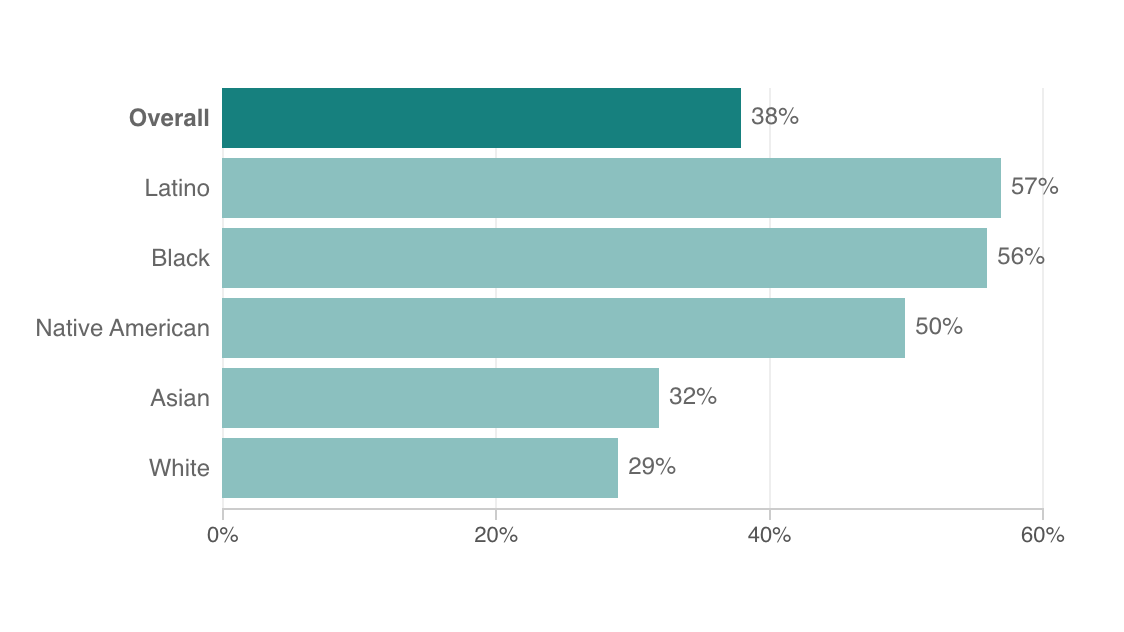
Thirty-eight percent of households across the nation report facing serious financial problems in the past few months. Among Latino, Black and Native American households, more than 50% had serious financial problems, while 29% of white households did. This disparity is echoed in many other poll findings, with the minority families bearing a disproportionate share of the pandemics’ socio-economic impact.

Brittany Mitchell’s family is among those that are struggling. She lives in Gaston, S.C. and she’s a full-time cake decorator at the local Food Lion grocery store — her husband is a butcher. They were weathering the pandemic well enough, until her husband lost his job.

“There was a good two months where we really couldn’t pay rent, we couldn’t pay electric, we couldn’t pay for our internet,” she says. “We were basically borrowing from friends and family members just to make ends meet.”

Mitchell was able to enroll in rental assistance, and she says her landlord was very understanding. Her husband got a new job, but now they’re behind on utility and car payments.

“We’re still struggling real hard just to get through,” she says.

A sharp income divide

The poll showed a sharp income divide, with 59% of those with annual incomes below $50,000 reporting serious financial problems in the past few months, compared with 18% of households with annual incomes of $50,000 or more.

All this, despite the fact that around two-thirds of households report that they have received financial assistance from the government in the past few months during the delta variant surge.

It appears that the funding from COVID-19 relief bills, Blendon says, “did not provide a floor to protect people who are of moderate and low incomes.”

Add
Read More

These 3 Health Tech Startups Are Case Studies – Crunchbase News

These 3 Health Tech Startups Are Case Studies – Crunchbase News

March 12, 2020, was always going to be memorable for Jason Feldman, because that was the day his men’s health-focused startup, Vault Health, was set for a major rebrand and national rollout. But now the day is etched in his mind because it set his company on an unexpected trajectory that led to growth beyond his expectations. 

On that mid-March Thursday, Feldman stood on the stock market floor in New York and witnessed the chaos as the country’s Dow Jones Industrial Average and S&P 500 saw the greatest single-day percentage dip since 1987. 

Subscribe to the Crunchbase Daily

The founder and CEO was there to pose for photos and provide an interview to announce Vault Health’s next moves, but instead found the market was reacting to the COVID-19 virus. The deadly coronavirus had been declared a pandemic by the World Health Organization the day before, and would be branded a national emergency in the United States by then-President Donald Trump less than 24 hours later. 

“I was there watching these investors on the floor of the stock exchange freaking out because the market literally was crashing,” Feldman remembered in a recent interview with Crunchbase News. “So we go back to the office, and I thought ‘What are we going to do?’ Because we had literally just launched the brand nine months before and built all this technology and here we are. Now I’m afraid that peoples’ jobs are at risk, and I don’t know how we’re going to live.” 

Vault not only lived, but grew significantly over the next year and a half. 

The pandemic set in motion a new trajectory for many healthtech startups, particularly those nimble enough to respond to a world crisis that confused and broke traditional public health care systems. And while tech’s contribution during the pandemic was a mixed bag of good and bad, those that figured out how to quickly fill the needs of scared residents, governments and companies have been rewarded. 

Investors in the space raced to put money into digital health startups last year. In all, the industry raised $16.6 billion in investments globally while the pandemic raged on, up from $12.5 billion the year before, according to Crunchbase data. So far in 2021, the industry has raised nearly $20 billion in funding, the data show. 

Of those that successfully made a pandemic pivot, many lucked out having existing partnerships

Read More

A Wrenching Farewell: Bidding Adieu to My Primary Care Doctor After Nearly 30 Years

A Wrenching Farewell: Bidding Adieu to My Primary Care Doctor After Nearly 30 Years

I hadn’t expected the tears.

My primary care doctor and I were saying goodbye after nearly 30 years together.

“You are a kind and a good person,” he told me after the physical exam, as we wished each other good luck and good health.

“I trust you completely — and always have,” I told him, my eyes overflowing.

“That means so much to me,” he responded, bowing his head.

Will I ever have another relationship like the one with this physician, who took time to ask me how I was doing each time he saw me? Who knew me from my first months as a young mother, when my thyroid went haywire, and who since oversaw all my medical concerns, both large and small?

It feels like an essential lifeline is being severed. I’ll miss him dearly.

This isn’t my story alone; many people in their 50s, 60s and 70s are similarly undergoing this kind of wrenching transition. A decade from now, at least 40% of the physician workforce will be 65 or older, according to data from the Association of American Medical Colleges. If significant numbers of doctors retire, as expected, physician shortages will swell. Earlier this year, the AAMC projected an unmet need for up to 55,200 primary care physicians and 86,700 specialists by 2033, amid the rapid growth of the elderly population.

Stress from the covid pandemic has made the outlook even worse, at least in the near term. When the Physicians Foundation, a nonprofit research organization, surveyed 2,504 doctors in May and June, 61% reported “often experiencing” burnout associated with financial and emotional strain. Two percent said they had retired because of the pandemic; another 2% had closed their practices.

Twenty-three percent of the doctors surveyed said they’d like to retire during the next year.

Baby boomers, like me, whose medical needs are intensifying even as their longtime doctors bow out of practice, are most likely to be affected.

“There’s a lot of benefit to having someone who’s known your medical history for a long time,” especially for older adults, said Dr. Janis Orlowski, AAMC’s chief health care officer. When relationships with physicians are disrupted, medical issues that need attention can be overlooked and people can become less engaged in their care, said Dr. Gary Price, president of the Physicians Foundation.

My doctor, who’s survived two bouts of cancer, didn’t mention the pandemic during our recent

Read More

Most adults shouldn’t take daily aspirin to prevent heart attack, panel says

Most adults shouldn’t take daily aspirin to prevent heart attack, panel says

Taking a daily low-dose aspirin has long been recommended for heart health, but an influential organization changed its guidance on Tuesday. 

The U.S. Preventive Services Task Force, an independent panel of experts, released an updated draft recommendation that says most adults not take aspirin to prevent first heart attacks or strokes. 

The previous guidance recommended daily low-dose aspirin for people over 50 who were at higher risk for heart attacks or strokes in the next decade and who weren’t at higher risk for bleeding. 

The updated guidance recommends that adults in their 40s and 50s only take aspirin as a preventive measure if their doctors determine they are at higher risk for heart disease and that aspirin may lower the risk without significant risk of bleeding. (The previous guidance didn’t address anyone younger than 50.) People ages 60 or older are now advised not to start taking aspirin to prevent first heart attacks or strokes.

The draft recommendations don’t apply to people who have already had heart attacks or strokes; the task force still recommends that they take aspirin preventively.

“For anyone who is on aspirin because they’ve already had a heart attack or stroke, it’s a very important medication,” said Dr. Erin Michos, an associate director of preventive cardiology at the Johns Hopkins Ciccarone Center for the Prevention of Heart Disease, who isn’t part of the task force. 

Heart disease is the leading cause of death in the U.S., and according to the most recent data available, 29 million adults in the U.S. take aspirin daily to prevent heart disease even though they don’t have histories of it. 

Aspirin acts as an anticoagulant, meaning it helps to prevent blood clots from forming. A clot that cuts off blood flow to the heart leads to a heart attack; one that cuts off blood flow to the brain causes a stroke. The idea behind taking a daily low-dose aspirin was to lower the risk of such clots, lowering the risk of heart attack or stroke. 

But the same mechanism that lets aspirin prevent blood clots from forming can also increase a person’s risk of bleeding, because it prevents blood from clotting at the site of a wound. 

Newer studies that informed the latest task force recommendations found that for most healthy people, the risk of bleeding caused by aspirin outweighs the benefits of preventing blood clots. For the same reason, the

Read More

What the latest COVID research says about breakthrough cases and transmission : Shots

What the latest COVID research says about breakthrough cases and transmission : Shots

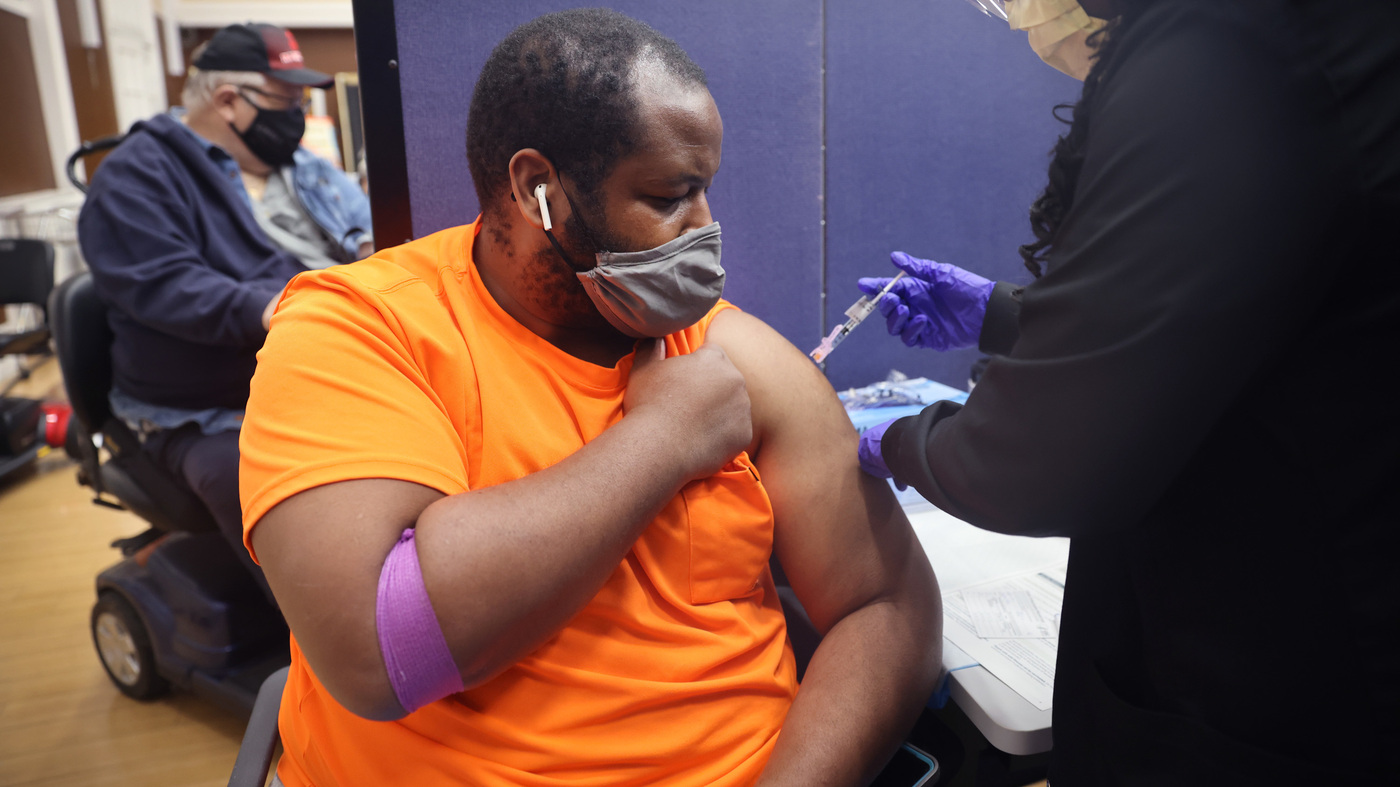
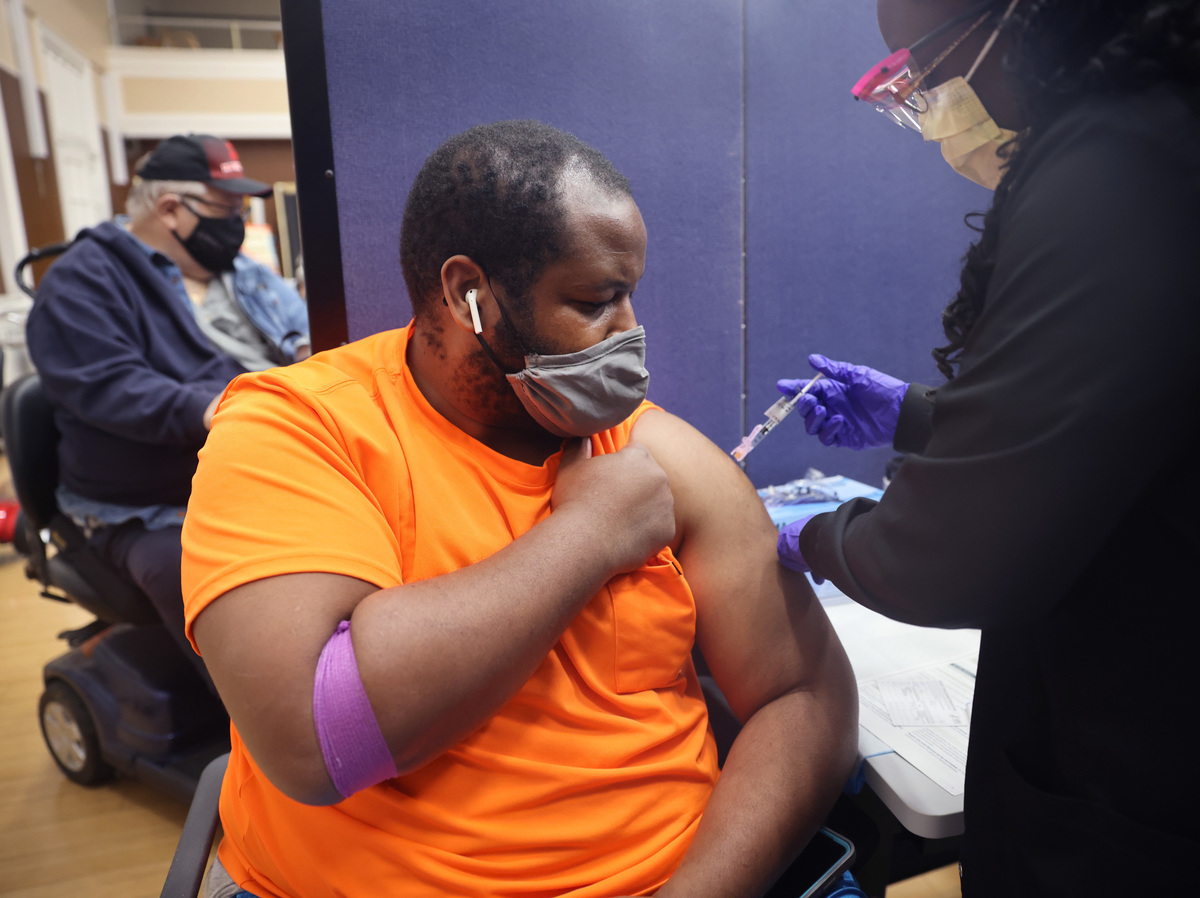
Gloria Clemons gives a COVID-19 vaccine to Navy veteran Perry Johnson at the Edward Hines, Jr. VA Hospital in Hines, Ill., in September.

Scott Olson/Getty Images


hide caption

toggle caption

Scott Olson/Getty Images


Gloria Clemons gives a COVID-19 vaccine to Navy veteran Perry Johnson at the Edward Hines, Jr. VA Hospital in Hines, Ill., in September.

Scott Olson/Getty Images

Conventional wisdom says that if you’re vaccinated and you get a breakthrough infection with the coronavirus, you can transmit that infection to someone else and make that person sick.

But new evidence suggests that even though that may happen on occasion, breakthrough infections might not represent the threat to others that scientists originally thought.

Ross Kedl, an immunologist at the University of Colorado School of Medicine, will point out to anyone who cares to listen that basic immunology suggests the virus of a vaccinated person who gets infected will be different from the virus of an infected unvaccinated person.

That’s because vaccinated people have already made antibodies to the coronavirus. Even if those antibodies don’t prevent infection, they still “should be coating that virus with antibody and therefore helping prevent excessive downstream transmission,” Kedl says. And a virus coated with antibodies won’t be as infectious as a virus not coated in antibodies.

Scant evidence for easy transmission of breakthrough infections

In Provincetown, Mass., this summer, a lot of vaccinated people got infected with the coronavirus, leading many to assume that this was an example of vaccinated people with breakthrough infections giving their infection to other vaccinated people.

Kedl isn’t convinced.

“In all these cases where you have these big breakthrough infections, there’s always unvaccinated people in the room,” he says.

In a recent study from Israel of breakthrough infections among health care workers, the researchers report that in “all 37 case patients for whom data were available regarding the source of infection, the suspected source was an unvaccinated person.”

It’s hard to prove that an infected vaccinated person actually was responsible for transmitting their infection to someone else.

“I have seen no one report actually trying to trace whether or not the people who were vaccinated who got infected are downstream — and certainly only could be downstream — of another vaccinated person,” Kedl says.

There’s new laboratory evidence supporting Kedl’s supposition. Initially, most vaccine experts predicted that mRNA vaccines like the ones made by Pfizer and Moderna that are

Read More

Religious Vaccine Exemption Stays for NY Health Care Workers | New York News

Religious Vaccine Exemption Stays for NY Health Care Workers | New York News

By MICHAEL HILL, Associated Press

ALBANY, N.Y. (AP) — New York health care workers will be able to seek religious exemptions from a statewide COVID-19 vaccine mandate as a lawsuit challenging the requirement proceeds, a federal judge ruled Tuesday.

Judge David Hurd in Utica had issued a temporary restraining order a month ago after 17 doctors, nurses and other health professionals claimed in a lawsuit that their rights would be violated with a vaccine mandate that disallowed religious exemptions.

Hurd’s preliminary injunction Tuesday means New York will continue to be barred from enforcing any requirement that employers deny religious exemptions. And the state cannot revoke exemptions already granted.

Gov. Kathy Hochul said she will fight the decision in court “to keep New Yorkers safe.”

Political Cartoons

“My responsibility as governor is to protect the people of this state, and requiring health care workers to get vaccinated accomplishes that,” she said in a prepared statement.

State health officials said that as of Tuesday, facilities reported 7,070 hospital workers, or 1.4% of total employees, had claimed a non-medical exemption, as did 2,636 nursing home workers, or 1.8% of employees.

Hurd wrote that the health care workers suing the state were likely to succeed on the merits of their constitutional claim. The question presented in this case, Hurd wrote, is whether the mandate “conflicts with plaintiffs’ and other individuals’ federally protected right to seek a religious accommodation from their individual employers. The answer to this question is clearly yes.”

“This is clearly just a ridiculous government overreach,” said Christopher Ferrara, the Thomas More Society special counsel who represented the plaintiffs. “You can’t do this to people. You can’t call them heroes one day and then throw them out on the sidewalk the next day.”

Hochul’s administration began requiring workers at hospitals and nursing homes to be vaccinated on Sept. 27 and more recently expanded the requirement to include workers at assisted living homes, hospice care, treatment centers and home health aides.

The plaintiffs, all Christians, oppose as a matter of religious conviction any medical cooperation in abortion, including the use of vaccines linked to fetal cell lines in testing, development or production, according to court papers.

Several types of cell lines created decades ago using fetal tissue exist and are widely used in medical manufacturing, but the cells in them today are clones of the early cells, not the original tissue.

The COVID-19

Read More