
Exercising Mental Fitness as We Move Forward with Our Covid Recovery

Exercising Mental Fitness as We Move Forward with Our Covid Recovery

Exercising Mental Fitness as We Move Forward with Our Covid Recovery

New York City (photo: Michael Appleton/Mayoral Photography Office)


In Southern California, three generations of a family gathered their separate households under one roof to weather the pandemic — and liked it so much they decided to make it permanent. On the Upper West Side of Manhattan, students organized to buy groceries and essentials for the housebound. And as the virus surged, a nationwide Brides’ magazine survey of engaged couples showed that 82% found the pandemic only made them keener to wed.

COVID-19, this nation’s deadliest pandemic, has taken the lives of over 700,000 Americans and about 4.5 million people worldwide. Everyone has been through some struggle – illness, grief over unimaginable loss, or the miasma of uncertainty about jobs, education, and daily routines. Amid tragedy and challenges, though, people have shown remarkable kindness. They have also forged new bonds, gained fresh insights into what it means to be there for others, and re-examined life priorities. 

A Pew research survey of what it called the pandemic’s silver linings and struggles showed the clarity that came from being thrown together or living apart from loved ones and friends, and losing the underpinnings of everyday life, from office work to entertainment. The renowned economist Paul Krugman has even theorized that workers are quitting jobs at record rates in part because the pandemic has made them rethink their lives. 

As we negotiate re-entry into work, school, socializing, and public spaces, plenty of us are dusting off that saying attributed to Winston Churchill: never let a good crisis go to waste. As an advocate for mental wellbeing, I do indeed believe that we can use these difficult days to foster personal growth and improve mental fitness.

By mental fitness I mean not just getting by or holding on. Rather, I define mental fitness as actively taking steps to achieve and maintain a state of wellbeing. Wellbeing means being more intentional: naming what we think, feel, and believe, and managing our emotions and behavior. We will all have ups and downs, but the more mentally fit we are, the more likely we are to weather a major life crisis or even a global pandemic.

Our level of mental fitness indicates whether we are able to draw on coping strategies that do not involve substance misuse, withdrawal, or hurting ourselves or others. The same way we work on toning our arms and legs and increasing our strength,

Read More

Rise of syphilis in the U.S reflects neglect of long-term public health funding : Shots

Rise of syphilis in the U.S reflects neglect of long-term public health funding : Shots

Mai Yang, a communicable disease specialist, searches for Angelica, a 27 year-old pregnant woman who tested positive for syphilis, in order to get her treated before she delivers her baby.

Talia Herman for ProPublica


hide caption

toggle caption

Talia Herman for ProPublica


Mai Yang, a communicable disease specialist, searches for Angelica, a 27 year-old pregnant woman who tested positive for syphilis, in order to get her treated before she delivers her baby.

Talia Herman for ProPublica

When Mai Yang is looking for a patient, she travels light. She dresses deliberately — not too formal, so she won’t be mistaken for a police officer; not too casual, so people will look past her tiny 4-foot-10 stature and youthful face and trust her with sensitive health information. Always, she wears closed-toed shoes, “just in case I need to run.”

This story comes from ProPublica, a nonprofit newsroom that investigates abuses of power. Sign up to receive their biggest stories as soon as they’re published.

Yang carries a stack of cards issued by the Centers for Disease Control and Prevention that show what happens when the Treponema pallidum bacteria invades a patient’s body. There’s a photo of an angry red sore on a penis. There’s one of a tongue, marred by mucus-lined lesions. And there’s one of a newborn baby, its belly, torso and thighs dotted in a rash, its mouth open, as if caught midcry.

It was because of the prospect of one such baby that Yang found herself walking through a homeless encampment on a blazing July day in Huron, Calif., an hour’s drive southwest of her office at the Fresno County Department of Public Health.

She was looking for a pregnant woman named Angelica, whose visit to a community clinic had triggered a report to the health department’s sexually transmitted disease program. Angelica had tested positive for syphilis. If she was not treated, her baby could end up like the one in the picture or worse — there was a 40% chance the baby would die.

Yang knew, though, that if she helped Angelica get treated with three weekly shots of penicillin at least 30 days before she gave birth, it was likely that the infection would be wiped out and her baby would be born without any symptoms at all. Every case of congenital syphilis, when a baby is born with the disease, is avoidable. Each is considered a

Read More

Nutrition club promotes healthy lifestyle | News

Nutrition club promotes healthy lifestyle | News

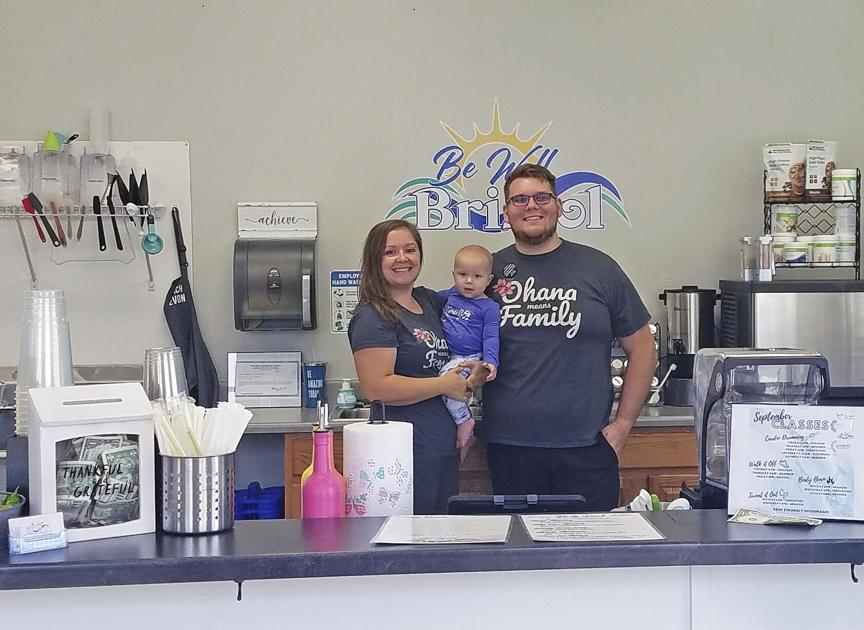
BRISTOL — A local health and nutrition shake club has reopened under new ownership. Entrepreneurs Devon Hill and his wife Sarah Sauer have re-named the health foods club Be Well Bristol as part of their initiative to bring consistent healthy habits to the town.

The couple already owned and operated a sister location in Granger for almost four years and two other locations in Three Rivers and Vicksburg, Michigan. After years of establishing their health habits, this past year, they were faced with the opportunity to take on Be Well Bristol’s location full-time while raising their now 10-month-old daughter, Maiyah.

The club features energy teas, protein coffees, and nutritional protein shakes that are tailored to customers’ needs. They offer nut-free, dairy-free, vegetarian, and gluten-free products.

Sauer’s favorite drink at the club is Mom Juice, which she created when she was three months pregnant to help combat nausea and exhaustion. The drink contains protein, collagen for healthy hair, skin and nails, as well as B12 vitamins.

“Enhanced iced protein coffee with 28g of protein is my favorite,” Hill said.

Customer Julianne Billington expressed her enthusiasm for working with Be Well Bristol.

“I like the community of leadership and the women who cheer each other on. If you can get healthy and make money while you are doing it, to me that just makes sense,” Billington said.

The club also offers one-on-one nutritional coaching with customers to help them achieve their personal goals. All employees between every location the couple established can help clients with their coaching needs.

“People can come in here and get a shake, but we can also sit down and do consultation, make a meal plan and show them how to achieve their goals. Then if Devon and I are out of town, whoever is working can step in and help them,” Sauer said. “We have a group called the Fit Fam where clients can be plugged into our group from anywhere.”

JOURNEY TO WELLNESS

Sauer and Hill shared their health and fitness struggles, which brought them to eventually run a business focused on helping others achieve healthy daily habits.

“I had a brain hemorrhage and a stroke when I was 29 and I gained a lot of weight during my recovery,” Sauer said. “I was trying to find a way to get healthier again, so I got involved with a place like this in Elkhart and started

Read More

Arizona Privatized Prison Health Care to Save Money. But at What Cost?

Arizona Privatized Prison Health Care to Save Money. But at What Cost?

In 2017, Walter Jordan wrote a memo to a federal judge from the Arizona State Prison Complex in Florence. “Notice of Impending Death,” it said in a shaky hand.

Jordan told the judge that Arizona corrections officials and Corizon Health, the state prison system’s private health care contractor at that time, delayed treating his cancer for so long that he would be “lucky to be alive for 30 days.” Jordan, 67, had a common form of skin cancer that is rarely life-threatening if caught early, but said he experienced memory loss and intense pain from botched care. Other men in his unit were also denied treatment, he wrote, “all falling, yelling, screaming of pain.”

Jordan was dead eight days later.

Reviewing his medical records later, Dr. Todd Wilcox, a physician hired by lawyers for the state’s prisoners, agreed that Jordan’s death was likely preventable. Corizon’s treatment of Jordan’s “excruciating needless pain,” was “the opposite of how cancer pain should be managed,” he said.

Wilcox will take the stand in a landmark trial that begins Monday in Phoenix, the latest chapter in an almost decade-long struggle to determine whether Arizona’s prisoners are getting the basic health care they are entitled to under the law.

The trial pits Arizona against the people held in its prisons, who argue in a class-action lawsuit that the medical services they receive are so poor, they constitute cruel and unusual punishment. The state’s current health care contractor, Centurion, is the latest in a string of companies that have failed to pass muster with the courts.

None of the companies have been named as defendants in the lawsuit, because, the claimants say, the state is ultimately responsible for their care. The suit was originally filed in 2012, shortly before private contractors took over Arizona’s prison medical services. But whether privatization can provide decent care is one of the biggest issues looming over the trial.

The Arizona Department of Corrections declined to comment on pending litigation. Centurion of Arizona and Corizon, based in Tennessee, did not respond to multiple requests for comment.

Arizona is one of around two dozen states that use a private, for-profit contractor to provide prison medical care, and almost all have been sued. But a trial is rare, as most states settle to avoid this kind of exhaustive public scrutiny.

Health care in Arizona prisons is “grossly inadequate,” the prisoners have said in

Read More

Alliance Fitness Center celebrates 30th anniversary

Alliance Fitness Center celebrates 30th anniversary

Company Name: Alliance Fitness Center

Number of years in business: 30

Founder: Sarah Small

Founded: 1991

Location: 1 Meridian Blvd., Spring Township.

Principal leader: Sarah Small

What does your company produce: Fitness center.

How many employees: 14.

Mission: The mission of the Alliance Fitness Center is to unite the finest team of fitness professionals who together remain dedicated to helping individuals enhance their health and longevity through quality wellness programs. We have dedicated ourselves to reaching the highest level of education and expertise possible with the sole purpose of helping our clients eliminate those unhealthy lifestyles plaguing the American population.

How company started: Founded in 1991, our parent company Corporate Health Alliance (Alliance Fitness Center was located in the Meridian Corporate Center) rapidly made its mark in group exercise, providing Reading, Allentown and Hershey based companies and school districts with quality group exercise options. With over 31 years of experience in commercial and corporate fitness center management, Sarah M. Small, president and marketing director of CHA, expanded the companies services to include health awareness, behavior intervention programming and corporate site management and fitness facility consulting.
When it comes to fitness, Alliance Fitness Center evaluates clients specific needs, goals and preferences. One reason for our high client success rate is that we turn each member’s distinctiveness into a training advantage. Alliance fitness trainers and nutrition coaches are masters at creating specialized programs that align with client goals while focusing on their overall fitness experience. We ensure that fitness becomes a part of your lifestyle and that our clients enjoy themselves in the process.

Key to company’s success: Education first — an AFC Certified Personal Trainer has the education and expertise to assess your physical capacities and program you with an individual exercise program that fits within our abilities and goals. Whether you’re an athlete looking to increase sports performance or a busy career person looking to stay fit and healthy, our trainers will set you up for success!

Website: https://www.alliancefitnesscenter.com

Phone Number: 610-376-2322

Business Spotlight highlights company anniversaries beginning with the 10th anniversary and in five-year increments after that. To submit a Business Spotlight, go to readingeagle.com and click the Main Menu on the left side, then click on the Business tab, then the Business Spotlight form. All information in the story was submitted by the company. The Reading Eagle reserves the right to edit submitted copy for style, clarity and

Read More

Health care plagued by new supply chain shortages

Health care plagued by new supply chain shortages

From medications to gloves to crutches, the strains of the global supply chain are hitting U.S. health care hard.

Why it matters: Shortages of health care supplies can quickly jump from a nuisance to a life-or-death proposition. They indicate serious vulnerabilities in the U.S. health care supply chain.

State of play: After seeing major supply shortages for protective equipment and ventilators in the early months of the pandemic, critical supplies stabilized and, in some places, demand for domestic products later bottomed out.

  • Now global supply chain tie-ups are rippling across the industry again, leading to extended wait times for commonly used supplies and equipment.

What they’re saying: “We’re experiencing a vast array of global challenges that, layered together, create bottlenecks in a system not designed for such demands,” according to an October report from medical supply giant Premier.

  • Premier projects the problems for health care to last well into 2022.

Details: Some hospitals around the U.S. recently began seeking donations of aluminum crutches, walkers and wheelchairs.

  • The FDA is investigating allegations that used medical gloves were washed and resold as new gloves.
  • Blood tubes and Foley catheters are also among some of the products in short supply at the University of Alabama at Birmingham, ABC 33/40 reported.
  • There are shortages of raw materials for manufacturing, including semiconductors, or chips commonly used in electronics, and plastic resins that can be used to make everything from car parts to heart valves.
  • The chip shortage hit ResMed, a company that creates ventilators, sleep apnea machines, and other respiratory equipment, San Diego Union-Tribune reported last week.

What they’re saying: “I am definitely working with some of the biggest names out there and really asking, begging, pleading that we should prioritize medical devices over another cellphone, another electric car, another cloud-connected refrigerator,” ResMed CEO Mick Farrell told the Union-Tribune.

Drug shortages at retail pharmacies and hospitals are also a concern.

  • Hundreds of drugs are in shortage at hospital pharmacies, including the anti-inflammatory drug tocilizumab, which is given to both cancer and COVID-19 patients, CBS News reported.
  • A pharmacy in Michigan said inhalers are one of the most difficult items to get, ABC 12 News reported. A South Carolina pharmacy said there are a few blood pressure medications they can’t get in stock, News 19 reported.
  • And a Nashville pharmacy said they were even having trouble getting prescription vials to
Read More