Robin and Lauren Magaziner got the bad news at just about the same time. After a relative learned that her breast cancer was tied to having a BRCA1 gene mutation, the New Hope, Pennsylvania, mother/daughter pair also underwent genetic testing, and found that they, too, carried the harmful mutation.
Along with other elevated cancer risks, a BRCA1 mutation brings a 55 to 72% chance of developing breast cancer over an individual’s lifetime, according to the National Cancer Institute. The Magaziners came to the same conclusion: Rather than having what Lauren calls a “ticking time bomb” in their bodies, they both underwent double mastectomy with DIEP flap breast reconstruction, which uses abdominal tissue in place of implants.
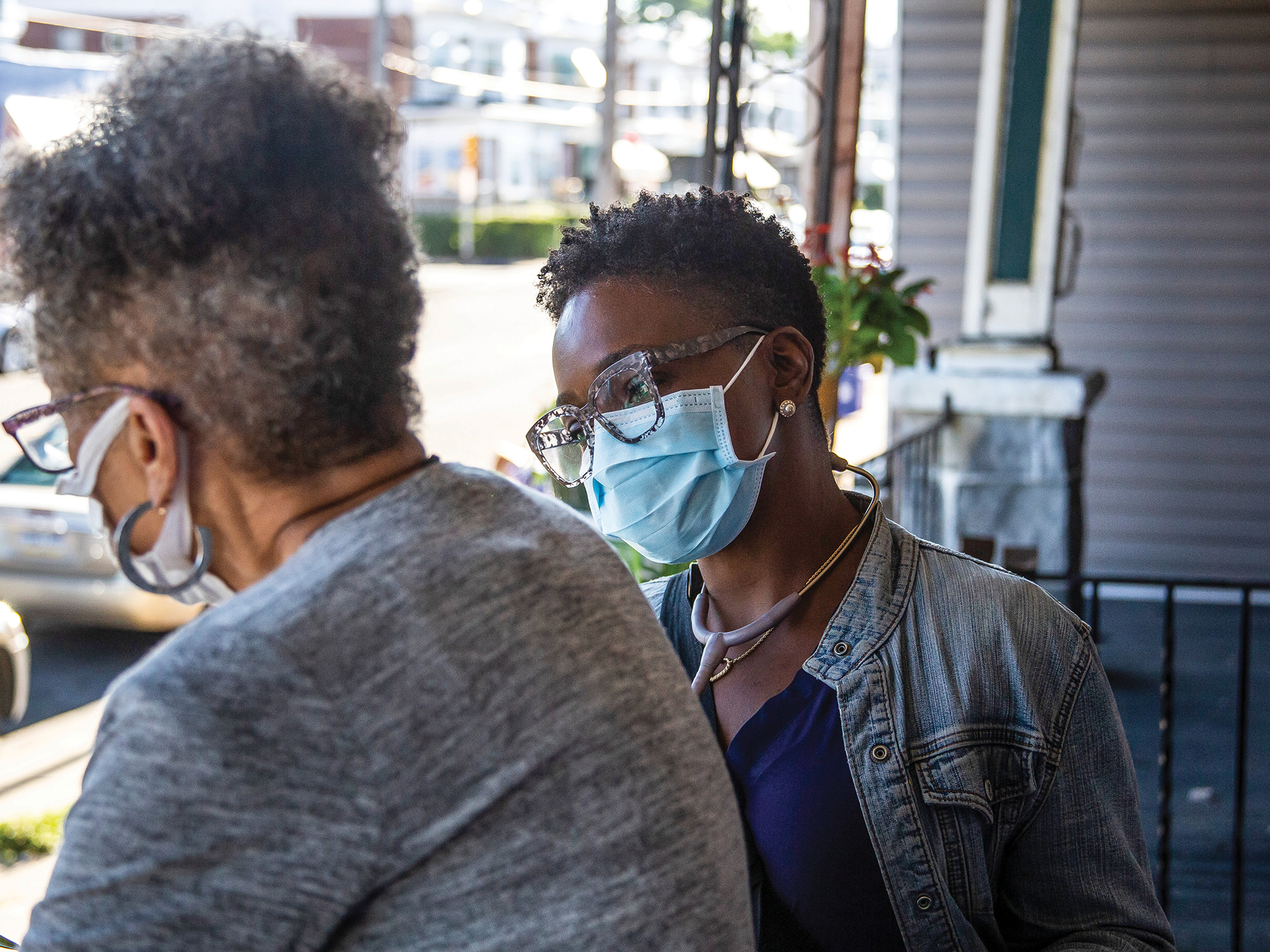
Lauren, an author of middle-grade fiction, went first, in March 2022 and mother Robin, a retired school teacher, six weeks later. Each accompanied the other to appointments prior to surgery, providing shoulders to lean on at every step of their shared journey. Afterwards, instead of repeatedly driving from their remote Bucks County home to their surgeon’s office in West Philadelphia, they both also received regular visits from Erin McCarthy, registered nurse case manager with Penn Medicine at Home. McCarthy did everything from adjusting medication to checking and eventually removing their surgical drains. One time, when Robin developed an open wound, McCarthy used telemedicine to contact her surgeon so they could, as a team, examine and address the problem.
“Erin reached one of my doctors right away, and I was able to get medicine quicker because of her,” says Robin. “She was able to get the care I needed before it got worse.”
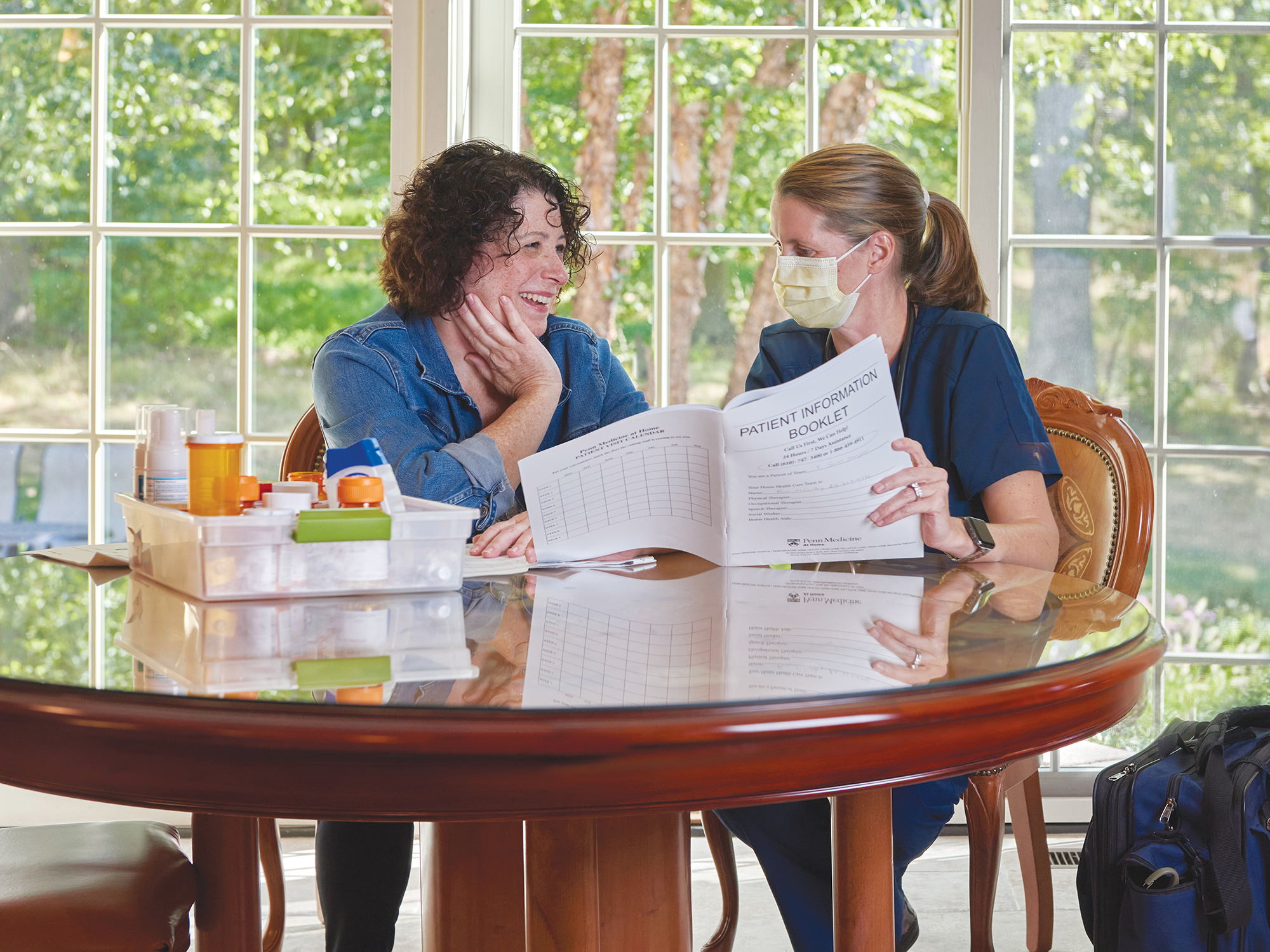
Having care at home saved the Magaziners time and stress after major surgery. “I loved that I was able to do this right from the house, because otherwise we’d have to drive 40 minutes and then wait in a doctor’s office,” says Lauren.
“Longer in traffic!” Robin interjects.
Plus, “during recovery, I didn’t feel comfortable being in the car because the seat belt pulls on your chest and stomach,” Lauren says.
“The vibrations from the car can make it painful,” Robin adds.
Penn Medicine provided nearly 730,000 home care visits for patients like Lauren