
3 Things to Know Before You Arm Your Employees With Fitness Trackers

3 Things to Know Before You Arm Your Employees With Fitness Trackers

Even the most seasoned and well-adjusted remote workers know the risk: If you’re not careful, working from home can bring your physical activity to a standstill. 

Employers know this too. Increasingly, they are looking for ways to bolster their wellness programs by offering fitness trackers, such as those made by Fitbit, Garmin, and Amazon, to help employees log more movement during the day. Another popular option called Oura makes smart rings that can track sleep, fitness, temperature, and even signs of illness. An Oura dashboard even lets employers view the likelihood of illness across their entire workforce.

Employees who log a certain amount of physical activity can then receive insurance discounts through many major health insurance companies, such as UnitedHealth Group, Blue Cross Blue Shield, Cigna, and Aetna. Beneficiaries can get reimbursed for prescription co-pays and other health care costs under their deductibles. 

But fitness trackers in the workplace, and health surveillance in general, also carry considerable privacy risks. More than 60 million records from Fitbit, Apple, and other companies were compromised in June after a data breach on GetHealth, a third-party group that provides employee fitness incentives. Data breaches of fitness trackers like Strava have revealed personal details such as the name and location of participants, even in anonymized data. Security risks aside, you may not even want to have so many personal details about your employees at your fingertips. After all, constant surveillance won’t exactly put your team at ease. 

Before offering fitness trackers to your employees, here are a few things you should keep in mind:

1. Fitness trackers will save you money on premiums, for now.

Workplace fitness-tracker programs often offer discounts on insurance premiums if employees meet certain fitness goals. Some employees can earn as much as $1,500 a year they can apply toward their health insurance premiums. Workers can get free or discounted wearables, workout clothing, and even gym equipment. On the employer side, a few studies have shown that fitness trackers can help you save money on premiums. But some companies have reported that their insurance costs have remained the same. 

At present, there are no laws or regulations in place to stop insurers from using fitness-tracker data to raise premiums. In an article published in The Journal of the American Medical Association, researchers from the AMA raised concerns that such data could increase insurance premiums for some groups. 

“Wearables can collect
Read More

Biden admin invests $100 million on health care labor shortage

Biden admin invests 0 million on health care labor shortage

The Biden administration announced Thursday that it will direct $100 million to the National Health Service Corps to help address the health care worker shortage.

Pulled from funding in the American Rescue Plan, the $100 million represents one of the nation’s biggest investments in a program that helps place primary care doctors in communities that have difficulty recruiting and retaining them. It’s a five-fold increase from previous years, the Department of Health and Human Services said.

The National Health Service Corps offers loan repayments and scholarships to clinicians in exchange for multiple years of service in areas that have a health care provider shortage.

“Whether you’re in rural America, or in a low income part of America, that shouldn’t be a reason why you can’t access good quality health care,” Health Secretary Xavier Becerra said in a phone interview. “And so we want to help states that are going to try to do what they can to keep that public health workforce in those rural communities, those low-income communities, they’re where people need them.”

The announcement comes after the United States lost 17,500 health care employees in September, according to the Bureau of Labor Statistics. With the industry’s employment figures now sitting at just under 16 million, the agency reported the country has lost 524,000 health care employees since the start of the pandemic. Job losses in nursing, hospitals and residential care saw the biggest drops in the industry last month.

Losing employees has in turn increased labor costs. Hospitals and other medical facilities have had to sharply increase spending on recruiting and retaining employees, according to a report published last week by Moody’s Investors Services. That has led to boosted benefit options and sign-on bonuses that can go well into five figures since the start of the pandemic.

“Covid has basically caused a laser focus on the glaring gaps and dysfunction across the American health care system,” said Tener Veenema, a scholar focused on workforce issues at Johns Hopkins University’s Center for Health Security. “Making investments to redistribute health care providers into rural areas, low-resourced areas, is so important because we know how much they are suffering from a lack of access to good health care.”

States will be able to apply for grants until April and the Department of Health and Human Services predicts it will make up to 50 awards as high as $1 million per

Read More

Unbiased Medicare plan comparison help available | Health & Fitness

Unbiased Medicare plan comparison help available | Health & Fitness

Mary Loftis knows the importance of paying attention to Medicare Prescription Drug plans.

Medicare Open Enrollment starts Friday, Oct. 15, and will continue until Dec. 7, said Loftis, a Nebraska State Health Insurance Program (SHIP) counselor.

People with Medicare Part D prescription drug insurance or Medicare Part C Advantage Plan insurance can compare 2022 plans during open enrollment.

Medicare plans can change from one year to the next — potentially affecting how a person’s coverage works.

Nebraska SHIP is available to help provide confidential and unbiased assistance in comparing plans for the coming year.

“It’s another year of changes and the only way to put your mind at ease and know you aren’t spending any more than necessary — you need to compare your prescriptions against all the Medicare health and drug plans,” Loftis told the Tribune.

Medicare enrollees should have received information from their 2021 Medicare Prescription Drug Plan advising of changes in premium, deductibles and drug coverages.

Another change that can affect the most economical plan for an individual in 2022 is that they may have added or reduced the prescriptions they take.

People are also reading…

But if they only look at the information they received by mail, the individual will not know if there are any new Medicare Prescription Drug Plans available in Nebraska for 2022, Loftis said in a prepared statement.

Loftis said there also will be changes in preferred pharmacies this year — and while premium costs are important — it is the coverage and cost of prescriptions which a person takes that really matter.

Even for those happy with their current plan, it’s a good idea to compare.

Then they can rest assured they’re not paying any more than necessary for prescriptions in 2022.

Nebraska SHIP and Medicare offer free counseling.

People need not leave their homes to get help. Nebraska SHIP is again offering phone appointment and virtual meetings using a computer or tablet.

Those interested in getting help comparing their Medicare Part D or Advantage Plan options may make an appointment to speak with a SHIP-certified counselor by calling:

Nebraska Extension in Burt County at 402-374-2929 or the state SHIP number at 1-800-234-7119.

With all the changes, it’s a great idea to make an appointment before they fill up.

Individuals also can visit http://www.medicare.gov/find-a-plan to compare plans themselves or enroll in a new plan.


Some of Tammy’s memorable stories

Read More

The pandemic has driven many Americans to delay health care : Shots

The pandemic has driven many Americans to delay health care : Shots

Hospitals in Idaho, like St. Luke’s Boise Medical Center in Boise, remain full after the summer delta surge pushed many to their limits.

Kyle Green/AP


hide caption

toggle caption

Kyle Green/AP


Hospitals in Idaho, like St. Luke’s Boise Medical Center in Boise, remain full after the summer delta surge pushed many to their limits.

Kyle Green/AP

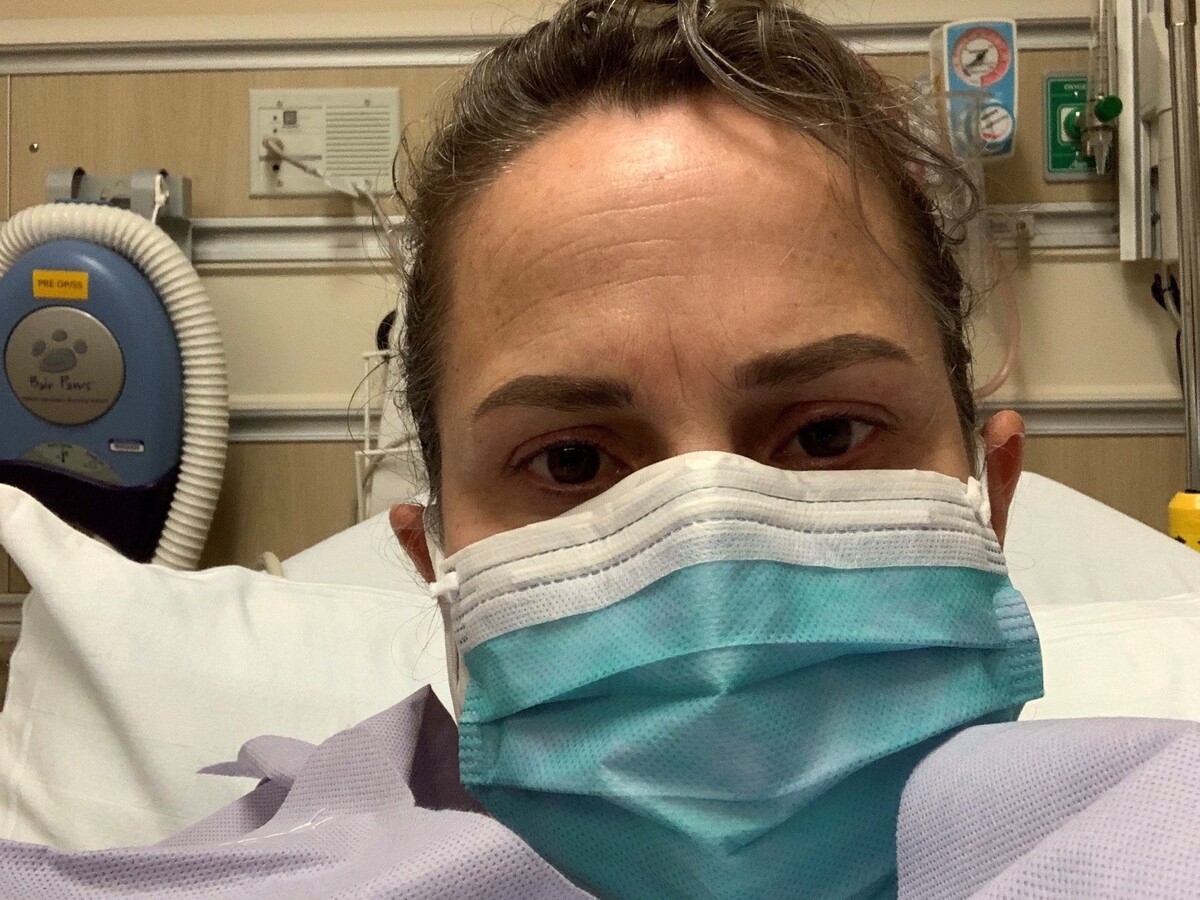
Last month, Chelsea Titus, a 40-year-old mother of one in Boise, Idaho, needed surgery to relieve severe pain from endometriosis. But hospitals there are so full of unvaccinated COVID-19 patients that doctors told her she’d have to wait.

Nearly 1 in 5 American households has had to delay care for serious illnesses in the past few months, according to a new poll from NPR, the Robert Wood Johnson Foundation and the Harvard T.H. Chan School of Public Health.

Titus, who works for a tech company from the home she shares with her husband, her daughter and a labradoodle named Winston, previously had surgery for endometriosis in which doctors removed her uterus and one ovary. When the condition flared again in September, the pain was severe.

“Sometimes it feels like I am in active labor,” she says.

Endometriosis affects millions of women in the U.S. when tissue that typically grows inside the uterus also grows outside it.

When the initial medication that Titus received didn’t help, she reached out to her on-call doctor.

“He said, ‘If the hospitals weren’t in the situation they were in, I would have you in for surgery today,’ ” she recalls.

The safety net is gone

The situation in Idaho’s hospitals has become dire. The facilities are so full of mostly unvaccinated COVID-19 patients that many can no longer operate normally. Several hospitals have had to ration care.

Chelsea Titus

Chelsea Titus/Boise State Public Radio


hide caption

toggle caption

Chelsea Titus/Boise State Public Radio


Chelsea Titus

Chelsea Titus/Boise State Public Radio

Jim Souza, chief physician executive at the largest of Boise’s hospitals, St. Luke’s, describes his institution’s typical high standards of care as the net that allows doctors to perform high-wire medical acts every day.

But now, “the net is gone and the people will fall from the wire,” Souza says.

Idaho has one of the lowest COVID-19 vaccination rates in the United States.

“As cancer clinicians, we’re really frustrated,” says Dr. Dan Zuckerman, medical director for St. Luke’s Cancer Institute.

Zuckerman says his staff has delayed surgery

Read More

Poll: Financial distress worsens for Americans during delta surge : Shots

Poll: Financial distress worsens for Americans during delta surge : Shots

Americans have fallen way behind.

The rent’s overdue and evictions are looming. Two-thirds of parents say their kids have fallen behind in school. And one in five households say someone in the home has been unable to get medical care for a serious condition.

These are some of the main takeaways from a new national poll by NPR, the Robert Wood Johnson Foundation and the Harvard T.H. Chan School of Public Health.

Despite billions of dollars in relief money from federal and state governments, “what we have here is a lot of people who are still one step from drowning financially,” says Robert Blendon, emeritus professor of health policy and political analysis at the Harvard Chan School.

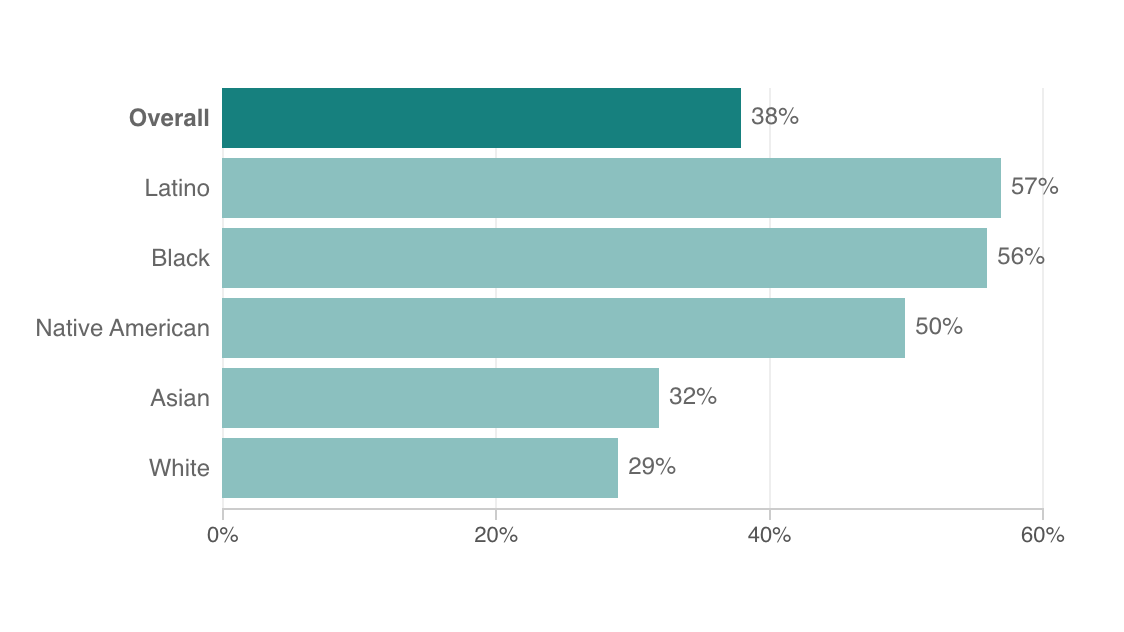
Thirty-eight percent of households across the nation report facing serious financial problems in the past few months. Among Latino, Black and Native American households, more than 50% had serious financial problems, while 29% of white households did. This disparity is echoed in many other poll findings, with the minority families bearing a disproportionate share of the pandemics’ socio-economic impact.

Brittany Mitchell’s family is among those that are struggling. She lives in Gaston, S.C. and she’s a full-time cake decorator at the local Food Lion grocery store — her husband is a butcher. They were weathering the pandemic well enough, until her husband lost his job.

“There was a good two months where we really couldn’t pay rent, we couldn’t pay electric, we couldn’t pay for our internet,” she says. “We were basically borrowing from friends and family members just to make ends meet.”

Mitchell was able to enroll in rental assistance, and she says her landlord was very understanding. Her husband got a new job, but now they’re behind on utility and car payments.

“We’re still struggling real hard just to get through,” she says.

A sharp income divide

The poll showed a sharp income divide, with 59% of those with annual incomes below $50,000 reporting serious financial problems in the past few months, compared with 18% of households with annual incomes of $50,000 or more.

All this, despite the fact that around two-thirds of households report that they have received financial assistance from the government in the past few months during the delta variant surge.

It appears that the funding from COVID-19 relief bills, Blendon says, “did not provide a floor to protect people who are of moderate and low incomes.”

Add

Read More

Alaris Announces “Camps by Alaris” Partnership with ABC Fitness Solutions, Leading Provider of Club Management Solutions in the Health Club and Fitness Industry

Alaris Announces “Camps by Alaris” Partnership with ABC Fitness Solutions, Leading Provider of Club Management Solutions in the Health Club and Fitness Industry

Camps by Alaris will provide a seamless, centralized experience for ABC customers in need of Camp Management

Published: Oct. 14, 2021 at 7:00 AM EDT|Updated: 22 hours ago

SAN FRANCISCO, Calif., Oct. 14, 2021 /PRNewswire/ — Alaris, known for helping fitness clubs go fully digital by streamlining check-in experiences and improving operations, has announced a new partnership with ABC Fitness Solutions. Together, the companies have developed Camps by Alaris, a seamlessly integrated solution that will allow ABC Fitness Solutions’ customers with expanded service offerings, such as kids club, afterschool programs and camps, to streamline and centralize online registration and digital check-in experiences The solution also provides dynamic reporting insights, which empower owners to make critical, cost-saving decisions, and has enhanced check-out security to ensure child safety and peace of mind for parents.

“For over a decade, Alaris has been helping Health Clubs unlock value by streamlining their Camp and Childcare programming. Especially important in today’s environment, improved Camp offerings have been shown to both improve member retention and drive much needed additional revenue. We are excited to partner with ABC Fitness Solutions on this fully integrated solution to provide value to the thousands of clubs that they serve,” says Jeremy Kelstrom, Founder & CEO of Alaris.

According to Jennifer Mellet, Chief Revenue Officer at ABC, a lot of their customers currently rely on manual processes for secondary and programmatic revenue streams. “This is critical functionality for a growing sector, and until now we have not been able to service our customers effectively.” Youth programs in health clubs have seen a 300% increase over the last 25 years and are very profitable.

Camps by Alaris is the latest addition to ABC IGNITE, ABC’s next generation fitness club management solution. “We’re on a mission to promote heathier lives by helping clubs put their members first. This is another step in our journey to redefine how fitness operators and their members interact with technology to reach their respective goals. Mentally and physically kids benefit from movement as much as their parents do,” continues Mellet, a mother of 2 tween girls.

Camps by Alaris will launch in October of 2021 at IHRSA in Dallas, Texas and will be readily available to customers of ABC Fitness Solutions. Both ABC and Alaris will be exhibiting at IHRSA 2021 in Dallas, TX. Please visit them at booths 100 and 1303,

Read More