
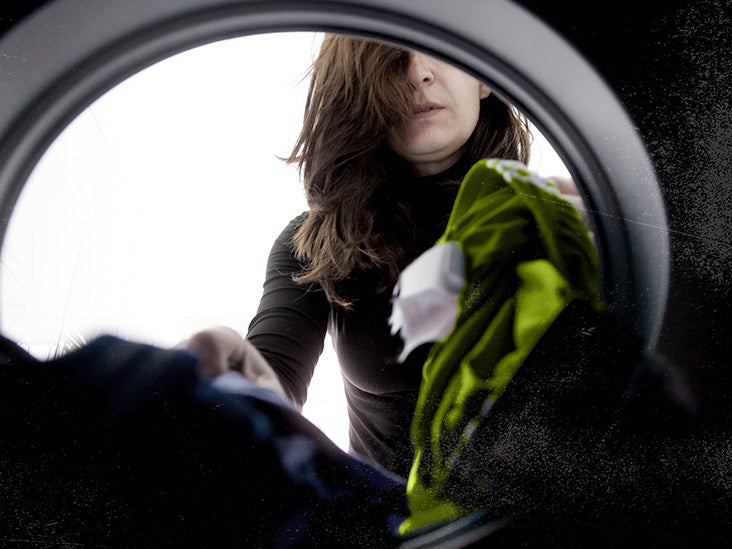
Over the last several decades, gender roles have evolved and changed to reflect shifting societal norms. Yet, despite these changes, unpaid household labor disparities still exist between partnered men and women worldwide. In this Special Feature, we take an in-depth look at how this unequal division of unpaid work affects women’s mental health and relationships. We also spoke with three experts to gain insight into this global issue.

Although gender roles are less rigid than they were decades ago, data suggest that, in heterosexual relationships, the burden of unpaid work still falls on women — even in cohabitating relationships where both partners are employed.
For example, 2021 US Bureau of Labor Statistics data shows that both spouses were employed in 46.8% of married couple families. Yet statistics also indicate that 59% of women report doing more household work than their partners.
However, other data suggest that since the mid-1970s, the amount of time men spend on household tasks has doubled. For instance, in 1976, men spent around 6 hours a week on household duties. In 2005, that number increased to around 12.5 hours per week.
But, in those same years, women still spent more time completing unpaid household labor — specifically, around 26 hours per week in 1976 and around 16.5 hours per week in 2005.
Still, the impact unpaid labor inequities may have on women’s mental health is often overlooked.
To examine this further, scientists from the University of Melbourne, Melbourne, VIC, Australia, investigated the relationship between unpaid labor and mental health among employed adults.
Their findings, published in
To conduct the research, the scientists reviewed 19 studies with 70,310 total participants from across the globe. Qualifying studies were peer-reviewed and measured the amount of unpaid labor among employed adults. They also outlined associations between this type of work and self-reported mental health concerns, including depression and psychological distress.
After examining the research, the study authors found that women reported taking on more unpaid work regardless of geographical location and time setting. Moreover, this added burden was associated with poorer mental health in